31 Cents a Gallon and No GPS: The Golden Age of the American Road Trip Is Gone
31 Cents a Gallon and No GPS: The Golden Age of the American Road Trip Is Gone
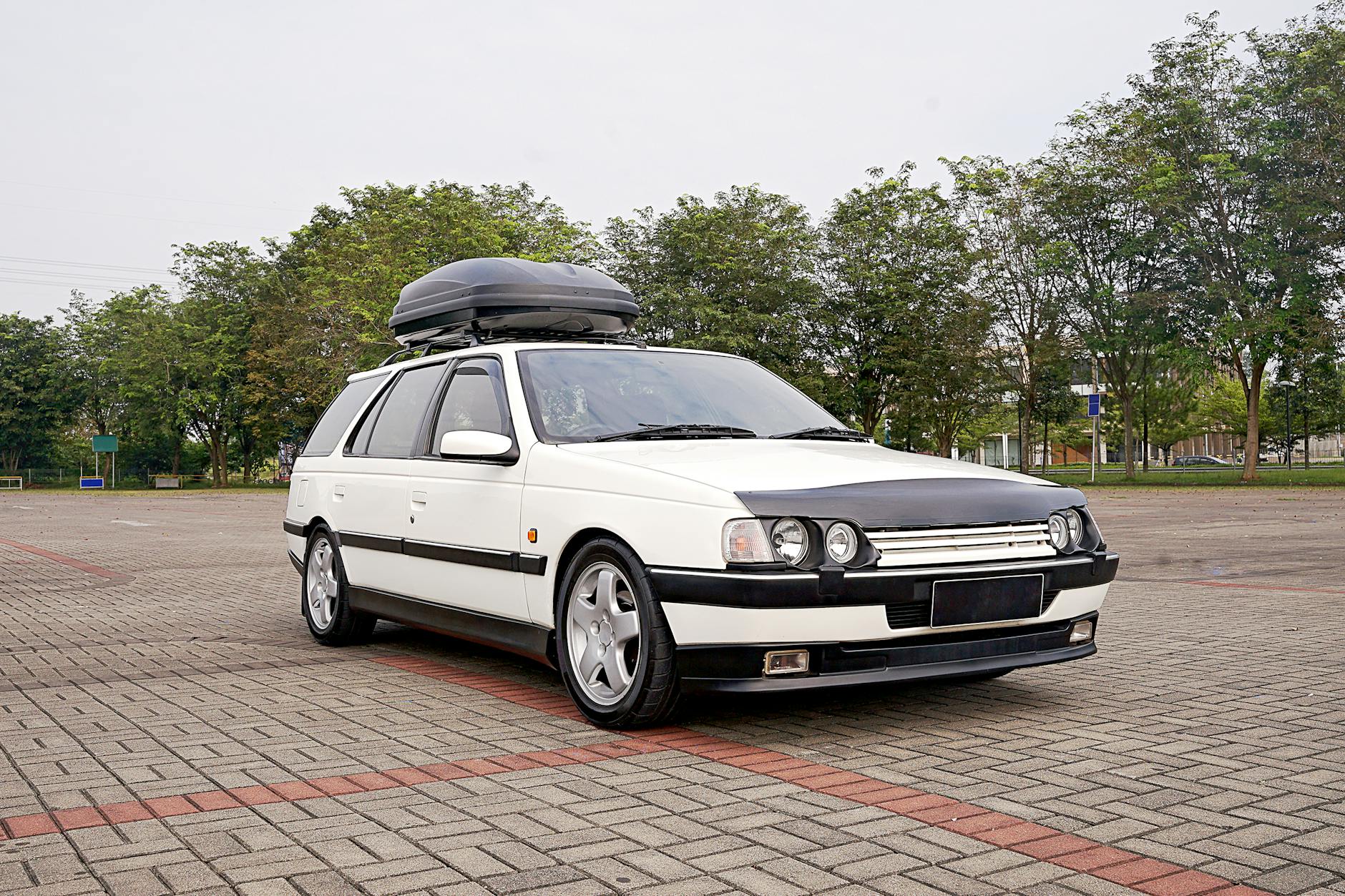
Somewhere in a shoebox in your parents' attic, there might be a photo of a family station wagon parked at a roadside attraction — some giant fiberglass dinosaur or a hand-painted sign promising the "World's Best Pie" twelve miles ahead. Nobody planned for it. Nobody had to. You just saw it, you pulled over, and it became the story you told for the next thirty years.
That version of the American road trip didn't disappear overnight. It faded, mile by mile, fill-up by fill-up, until one day we looked up from our navigation apps and realized the open road had become something else entirely.
When the Highway Was Brand New
To understand what road trips used to feel like, you have to understand what the 1950s and 60s did to American infrastructure. President Eisenhower signed the Federal Aid Highway Act in 1956, and within a decade, the Interstate Highway System was stitching the country together in ways that felt genuinely revolutionary. For the first time, a family in Ohio could point their car toward California and have a reasonable shot at getting there without navigating a patchwork of county roads and unmarked detours.
And it was cheap. In 1960, the average price of a gallon of regular gasoline was about 31 cents. By 1965, it had barely moved. A family car of that era — a Ford Galaxie, a Chevy Impala — might have a 20-gallon tank. Filling it up cost roughly six dollars. To put that in modern terms, adjusted for inflation that's around $60 today, but the wages of the era made it feel like pocket change relative to a weekly paycheck. Road trips weren't a luxury. They were what you did.
Motels multiplied along the new interstates almost overnight. Howard Johnson's had over 500 locations by the mid-1960s. Stuckey's pecan shops dotted every major highway corridor. Diners with hand-lettered menus and bottomless coffee were spaced just far enough apart that you were always a little hungry by the time you reached the next one. The infrastructure of the American road trip wasn't just roads — it was an entire culture built around forward motion and the next thing over the horizon.
The Paper Map Era and the Beauty of Not Knowing
Here's something younger drivers may find genuinely hard to imagine: people navigated cross-country trips using folded paper maps, and somehow, mostly, it worked.
Rand McNally road atlases were standard equipment in the family car, stuffed into the door pocket or shoved under the passenger seat. Before a big trip, someone — usually Dad — would trace the route in pencil the night before, marking exits and estimating mileage between stops. Kids in the backseat would track progress by watching the mile markers tick by.
When you took a wrong turn, you pulled into a gas station and asked. The attendant — yes, someone who came out and pumped your gas — usually knew exactly where you'd gone wrong. There was a human layer to navigation that we've since automated out of existence.
The absence of real-time information wasn't a flaw in the system. It was the system. You didn't know if the diner in the next town was any good until you sat down. You didn't know if the motel had vacancies until you saw the sign. That uncertainty created space for the unexpected, and the unexpected was often the best part.
What a Road Trip Costs Now
Fast forward to 2024, and the math has shifted dramatically. The national average price for a gallon of regular gasoline has hovered between $3.20 and $3.80 for much of the past few years, with California and other coastal states regularly pushing past $4.50. A full tank in a mid-size SUV — the modern equivalent of that family station wagon — now runs $55 to $80 depending on where you're filling up.
But the bigger cost isn't at the pump. It's in the planning. Modern road trips are increasingly engineered experiences. Travelers book hotels weeks in advance, cross-reference restaurant ratings on Yelp, and load up playlists, podcasts, and audiobooks before the first mile is driven. Google Maps doesn't just show you the route — it tells you which stretch of I-40 has slower traffic right now and suggests you leave 22 minutes earlier to avoid it.
There's nothing wrong with any of that. The food is better, the beds are more comfortable, and you're far less likely to end up lost on a gravel road in rural Kansas at 10pm. But something got traded in the process.
Spontaneity Didn't Survive the Algorithm
The roadside attraction still exists — but now it has a TripAdvisor page, a Google rating, and a parking lot full of people who drove there on purpose because it showed up on a "Hidden Gems of Route 66" listicle. The discovery is pre-curated. The surprise is scheduled.
Even the soundtrack has changed. In 1967, you got whatever came through the AM radio as the signal faded and a new station bled in from the next city. Static and all, it felt like the landscape was broadcasting itself at you. Today, you've got Spotify playlists and satellite radio and true crime podcasts that could outlast a drive from Chicago to Denver.
None of this makes modern road trips worse, exactly. They're just different. More comfortable. More efficient. More optimized for the destination and less tolerant of the detour.
The Road Is Still There
Here's the thing — the open road hasn't gone anywhere. The American West is still vast and genuinely humbling. A two-lane highway through the Texas Hill Country at sunrise can still make you feel like the last person on earth. The romance of the road trip isn't dead. It just requires a little more intentional resistance to the pull of the algorithm.
Some travelers are figuring that out. There's a growing movement of people deliberately leaving the GPS off for stretches, printing directions old-school, or committing to stopping at whatever looks interesting rather than what's been pre-approved by strangers on the internet.
Maybe the best road trips have always been the ones where you left a little room for things to go sideways. The question is whether we've forgotten how to do that — or whether we've just gotten a little too comfortable with knowing exactly where we're headed.
The interstate is still out there. The horizon still moves when you drive toward it. The only thing that changed is whether we're willing to show up without a plan.