America's Last Shared Soundtrack: When Everyone Knew the Same 40 Songs
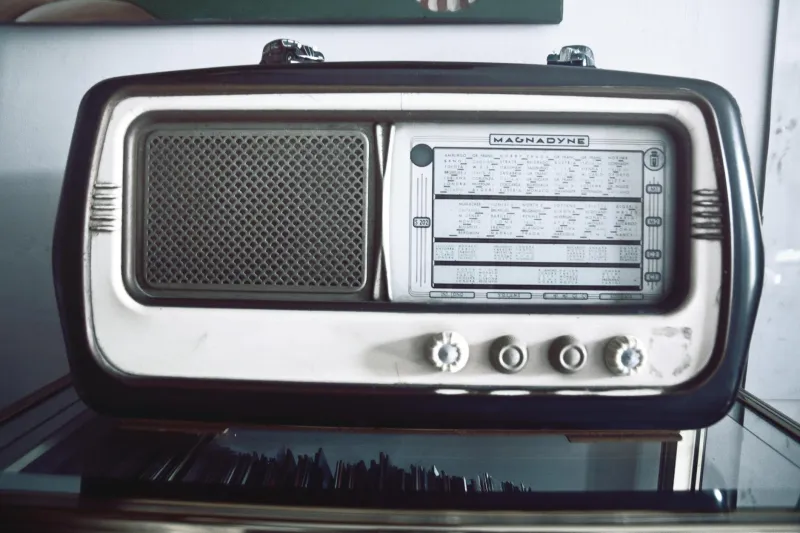
The Radio Tower That United a Nation
Picture this: It's 1987, and you're driving from Maine to California. Every time you hit the scan button on your radio, the same fifteen songs cycle through — "Walk Like an Egyptian," "Livin' on a Prayer," "Alone." By the time you reach the West Coast, you've heard Bon Jovi's latest hit roughly 200 times, and so has everyone else in America.
That shared musical experience — where a trucker in Alabama, a secretary in Minneapolis, and a college student in Portland all knew every word to the exact same songs — has vanished so completely that younger Americans can barely imagine it existed.
When 40 Songs Ruled 250 Million People
The Billboard Hot 100 wasn't just a chart; it was America's official playlist. Radio stations across the country operated like synchronized swimmers, playing the same rotation of hits with religious precision. Casey Kasem's "American Top 40" countdown became appointment listening for families gathered around kitchen radios on Sunday mornings.
This wasn't an accident. The music industry operated like a carefully orchestrated machine. Record labels pushed specific singles to radio program directors, who had real power to make or break careers with their playlist decisions. MTV added visual punch to the equation, but even they played the same videos in heavy rotation. The result? A genuinely shared cultural soundtrack.
Walk into any office, school cafeteria, or shopping mall in 1985, and you'd hear the same songs. More importantly, everyone around you would know them too. Singing along wasn't brave — it was inevitable.
The Streaming Revolution's Hidden Cost
Today's musical landscape offers something previous generations could never imagine: unlimited choice. Spotify serves up 100 million songs. Apple Music promises every genre, every era, every mood. YouTube lets bedroom artists reach global audiences without ever stepping foot in a record label's office.
But this infinite jukebox came with an unexpected trade-off. There's no longer a "Top 40" that actually matters to 40% of Americans, let alone 90%. An artist can rack up 500 million streams — numbers that would have made them the biggest star on Earth in 1987 — and still be completely unknown to half the country.
Bad Bunny dominated 2023's streaming charts with billions of plays, yet mention his name at a suburban barbecue and you'll get blank stares. Meanwhile, your grandmother probably knew every word to "Billie Jean" whether she wanted to or not.
The Algorithm Knows You Too Well
Streaming platforms pride themselves on personalization. Spotify's Discover Weekly promises to understand your taste better than you do. Apple Music's algorithm studies your listening habits like a doctoral thesis. These systems work brilliantly — perhaps too brilliantly.
They've created millions of individual musical universes, each perfectly tailored to one person's preferences. A country music fan in Nashville and a hip-hop enthusiast in Detroit now inhabit completely separate sonic worlds. Their playlists might not share a single song.
This personalization feels like progress — and in many ways, it is. Nobody has to endure songs they hate anymore. Niche genres that couldn't survive radio's mass-market demands now thrive in streaming's long tail. Artists who would never have gotten record deals can build devoted followings.
What We Lost When Everyone Got Their Own Soundtrack
But something subtle disappeared in this revolution: the shared cultural moment. There's no modern equivalent to everyone stopping what they're doing when "Thriller" came on the radio. No song today can unite a wedding dance floor the way "Don't Stop Believin'" still does — because that song comes from an era when everyone was forced to hear it.
The old system created accidental fans. You might not have chosen to like Cyndi Lauper, but after hearing "Time After Time" 500 times, it became part of your emotional landscape whether you wanted it or not. Radio's tyranny of repetition forged unexpected connections between songs and memories.
The Loneliness of Perfect Choice
Today's music discovery feels more like work. Instead of passively absorbing whatever the culture served up, we're expected to actively curate our own experience. We follow playlists, hunt for new artists, manage our own musical identity. It's more democratic, more diverse, more fair to artists.
It's also more lonely.
The water cooler conversations about last night's new video premiere have been replaced by algorithm-generated recommendations that nobody else received. The collective experience of waiting to hear your favorite song on the radio has been replaced by the instant gratification of playing exactly what you want, exactly when you want it.
Before the Blink of an Eye
We traded America's shared soundtrack for personalized perfection, and most of us didn't even notice it happening. One day we were all humming the same songs; the next day we were each humming different ones.
The old system had serious flaws — it was dominated by major labels, radio programmers held too much power, and countless great artists never got heard. But it created something we're still trying to replace: a common musical language that connected strangers across a continent.
Now we have infinite choice and perfect personalization. We can discover music from every corner of the globe, support independent artists directly, and never hear a song we don't like.
We just can't sing along with anyone else anymore.