Coffee Shop Contracts: When Buying a House Was as Simple as Ordering Pie

The Guy Who Knew Every Street
In 1975, if you wanted to buy a house in suburban America, you'd probably call Ed. Ed wasn't his full-time job — he sold insurance during the week and showed houses on weekends. He drove a wood-paneled station wagon with a magnetic sign on the door, and he knew which families were thinking about moving before they did.
Ed kept listings in a manila folder on his kitchen table. When the Johnsons decided to downsize, word spread through the coffee shop on Main Street faster than any MLS system. By the time Ed officially listed their colonial, three families had already walked through, and two were ready to make offers.
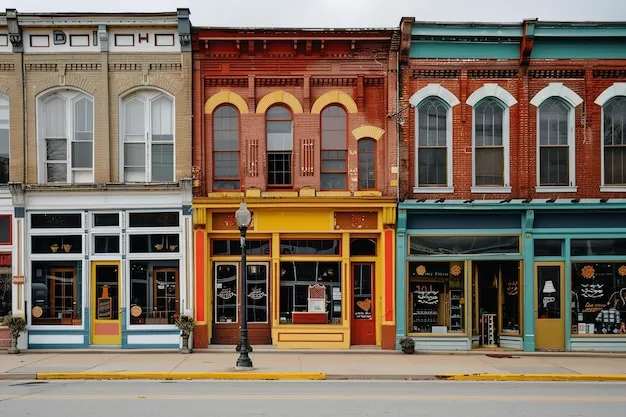 Photo: Main Street, via img.freepik.com
The whole transaction happened over handshakes and coffee. Ed would meet buyers at the diner, sketch out floor plans on napkins, and explain why the Henderson place had better bones than the Wilson house, even if it needed paint. He charged 5% commission, split it with whoever brought the buyer, and everyone understood that his word was his bond.
When Houses Sold Themselves
Back then, homes weren't staged for Instagram. The Millers didn't hire a company to arrange fake books on their shelves or place bowls of lemons on the kitchen counter. Their house looked like a family lived there because a family did live there. Buyers could imagine their own lives unfolding in those rooms precisely because they weren't looking at a sterile showroom.
Listings consisted of basic facts: three bedrooms, one and a half baths, nice yard, good schools. No one mentioned "chef's kitchens" or "spa-like bathrooms." A kitchen had a stove and a sink. A bathroom had a tub. If you wanted to know about the neighborhood, Ed would drive you around and point out where the good kids lived.
Most remarkably, the process moved fast. Really fast. The average time from listing to closing was about 30 days, not because of sophisticated systems, but because there were fewer moving parts. No inspection contingencies that lasted weeks, no appraisal delays, no mortgage underwriters in distant cities who needed to verify every dollar you'd ever earned.
The Algorithm Knows Best
Today's real estate landscape operates like a different planet entirely. Zillow's algorithm can estimate your home's value down to the dollar, but it can't tell you that the house next door has the friendliest neighbors or that the elementary school's principal actually cares about kids.
Modern real estate agents aren't part-timers who know your family's story. They're full-time professionals managing dozens of transactions simultaneously, armed with CRM systems that track every interaction and automated email sequences that nurture leads while they sleep. The personal touch hasn't disappeared entirely, but it's been systematized, optimized, and scaled.
Today's buyers don't discover houses through coffee shop conversations. They scroll through Redfin at midnight, setting up alerts for properties that match algorithmic profiles of their preferences. They take virtual tours before ever stepping foot on the property, and by the time they schedule a showing, they've already seen 47 photos and a 3D walkthrough.
The Performance Economy
The biggest change isn't technological — it's theatrical. Modern home selling has become a performance art where every surface must be styled, every room must photograph well, and every detail must appeal to the broadest possible audience scrolling through listings on their phones.
Professional stagers arrive with trucks full of neutral furniture, carefully curated art, and strategically placed plants. They remove family photos, personal items, and anything that suggests actual humans live in the space. The goal isn't to help buyers imagine their lives there — it's to create a backdrop that photographs well and generates online engagement.
This performance extends beyond staging. Listing descriptions read like marketing copy for luxury resorts. A small bathroom becomes a "powder room retreat." A basement becomes a "lower level entertainment space." Everything must be elevated, optimized, and positioned for maximum appeal in a crowded digital marketplace.
What We Lost in Translation
The efficiency gains are undeniable. Today's buyers can search nationwide inventory, get instant market analysis, and complete transactions entirely online. Information that once required local knowledge is now available to anyone with an internet connection.
But something essential was lost in this evolution: the human element that made buying a home feel like joining a community rather than completing a transaction. Ed knew which houses had good bones and which families made good neighbors. He understood that buying a home wasn't just about square footage and school districts — it was about finding where you belonged.
Modern real estate apps can tell you everything about a house except whether you'll be happy living there. They can calculate mortgage payments and property tax histories, but they can't explain why certain streets feel like home and others feel like addresses.
The Price of Progress
Today's real estate market is more efficient, more transparent, and more accessible than ever before. Buyers have access to information that would have required weeks of local research in Ed's era. Transaction costs have become more transparent, and regulatory protections have reduced the risk of fraud or discrimination.
Yet many buyers and sellers feel more anxious about the process than their parents did. The abundance of information creates analysis paralysis. The performance aspects feel inauthentic. The speed of the market — where houses sell in hours, not weeks — creates pressure that can turn home buying from an exciting milestone into a stressful competition.
The coffee shop contracts of yesteryear weren't necessarily better, but they were undeniably more human. In our rush to optimize and systematize the home buying process, we may have forgotten that buying a house is ultimately about much more than the house itself.