Dear Sarah: When Your Heart Lived in Handwriting
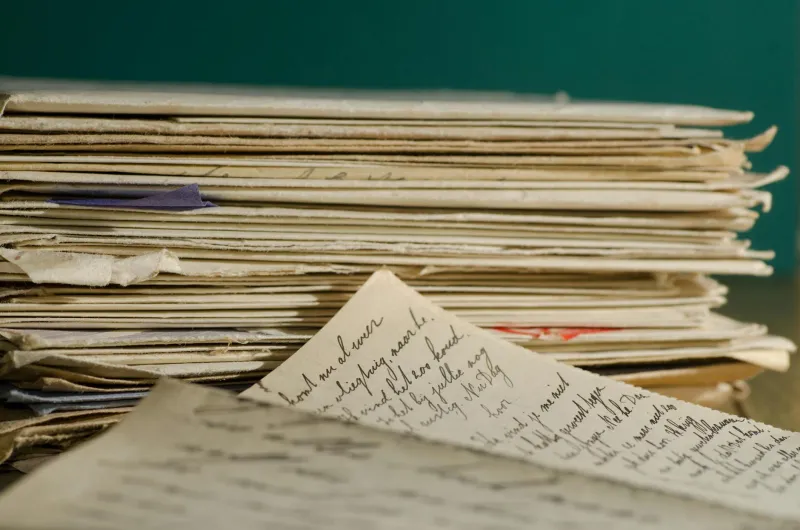
The Lost Art of Permanent Words
In 1955, the average American household received six pieces of personal mail per week. Letters from relatives, friends serving overseas, sweethearts separated by distance, and family members who lived just a few states away but might as well have been on another planet. These weren't quick updates or casual check-ins—they were deliberate acts of connection that demanded time, thought, and intention.
Every letter began with "Dear" and ended with careful consideration of how to sign off. "Love" was reserved for family and romantic partners. "Fondly" suggested warm friendship. "Yours truly" maintained polite distance. These weren't arbitrary conventions—they were a sophisticated emotional language that conveyed relationship status and feeling through formal structure.
The physical act of writing forced a different kind of communication. You couldn't fire off angry words in the heat of the moment because by the time you'd written them out, found an envelope, addressed it, and walked to the mailbox, the impulse had usually cooled. Letters required commitment to your words in a way that digital communication never has.
The Personality in Penmanship
Handwriting was as distinctive as a fingerprint and almost as revealing as a psychological profile. Your grandmother's careful cursive, learned in third grade and practiced for seventy years, told a story about patience and precision. Your uncle's hasty scrawl revealed someone who had thoughts faster than his pen could capture them.
People recognized each other's handwriting from across the room. Mail carriers could identify senders without looking at return addresses. The curve of certain letters, the pressure of the pen, the spacing between words—all of it carried information that went far beyond the actual message.
This wasn't just romantic nostalgia. Handwriting analysis was considered a legitimate way to understand personality. Employers sometimes requested handwritten cover letters. Graphology—the study of handwriting—was taught in schools and used in psychological evaluation. The physical act of forming letters with your hand created a direct connection between thought and expression that typing has never replicated.
The Shoebox Archives
American families once maintained extensive paper archives of their relationships. Love letters tied with ribbon. Christmas cards from decades of holidays. Thank-you notes from children's birthday parties. Condolence letters that helped families process grief. These collections weren't just sentimental—they were the primary record of family history and emotional life.
Women especially served as the keepers of correspondence. They wrote thank-you notes, maintained relationships with distant relatives, and preserved letters in shoeboxes and cedar chests that became family archives. When someone died, these collections provided a tangible connection to their personality and relationships that obituaries couldn't capture.
Historians studying ordinary American life rely heavily on these letter collections. The correspondence between husbands and wives during World War II, letters between parents and children at college, exchanges between friends separated by migration—this paper trail provides intimate insight into how Americans actually lived, loved, and thought during different eras.
The Economics of Connection
Writing letters was expensive in ways that made each one precious. Paper, pens, envelopes, and stamps represented real costs that made people consider whether their thoughts were worth the investment. A three-cent stamp in 1960 had the purchasing power of about 30 cents today—not prohibitive, but significant enough to make casual correspondence feel wasteful.
This economic friction created a natural filter that elevated the quality of communication. People saved up news and thoughts to make each letter substantial. They wrote drafts, reconsidered their words, and crafted messages that justified the cost and effort involved.
Long-distance relationships, whether romantic or familial, required serious commitment to letter writing. Couples separated by military service or job relocations conducted entire courtships through the mail. These relationships developed through words alone, creating bonds based on thought and expression rather than physical presence or shared activities.
The Death of Anticipation
Modern communication has eliminated one of letter writing's most powerful elements: anticipation. Waiting for a letter created emotional investment that instant messaging can't match. The delay between sending and receiving forced people to live with their words, to wonder how they'd be received, and to experience the genuine excitement of finding personal mail in the box.
This waiting period also created space for reflection. By the time a response arrived, both sender and recipient had time to process the previous exchange. Conversations developed more thoughtfully because you couldn't immediately react to everything you read. The natural pause built into postal communication encouraged deeper consideration of relationships and communication.
Today's instant replies eliminate this reflective space. We can send a message and receive a response within seconds, creating an expectation of immediate availability that previous generations would have found exhausting. The anticipation that once made receiving mail exciting has been replaced by anxiety about response times and read receipts.
What Historians Will Miss
The shift from letters to digital communication represents a massive loss for future historians trying to understand early 21st-century American life. Text messages disappear when phones are upgraded. Emails get deleted or lost when services shut down. Social media posts vanish when platforms change their policies.
Unlike the carefully preserved letter collections that document previous generations, our digital communications are ephemeral and scattered across platforms controlled by corporations. Future researchers won't find shoeboxes full of love letters in attics—they'll find empty cloud storage accounts and defunct social media profiles.
This isn't just about preserving individual relationships. Letters provided insight into broader cultural moments, social changes, and ordinary people's responses to historical events. The intimate, unguarded nature of personal correspondence revealed how Americans actually experienced their lives, not just how they presented themselves publicly.
The Intimacy We Traded Away
Handwritten letters created a unique form of intimacy that digital communication struggles to replicate. The physical object—paper that the sender had touched, ink that flowed from their pen, words formed by their hand—carried a tangible connection to the person. Recipients could hold something the sender had created specifically for them.
This physical connection extended to the reading experience. Letters were read slowly, often multiple times, and frequently saved for rereading later. The permanence of paper made words feel more significant than the disposable nature of digital messages. People treasured letters in ways that text messages, no matter how meaningful, never inspire.
The ritual of letter writing—selecting paper, choosing a pen, finding a quiet space to think and write—created a meditative quality that enhanced the communication itself. The slower pace allowed for more thoughtful expression and deeper emotional connection.
The Speed We Gained and Lost
Digital communication gave us speed and convenience that letter writers could never imagine. We can now maintain relationships across any distance with minimal effort or cost. Families separated by geography stay connected through constant contact. Friends share daily experiences in real-time.
But this efficiency came at the cost of depth and permanence. The ease of digital communication has made it less precious, less considered, and ultimately less meaningful. We send more messages than ever but preserve fewer of them. We stay in touch with more people but often with less genuine connection.
The handwritten letter represented communication as craft—something that required skill, patience, and intention. Its disappearance marks not just a technological shift but a cultural one, from valuing permanence and reflection to prioritizing speed and convenience. In gaining the ability to communicate instantly with anyone, anywhere, we lost the intimate art of communicating meaningfully with someone specific, somewhere, sometime worth remembering.