Fresh Milk, Daily Bread, and Zero Food Anxiety: When Delivery Was Personal Before It Became Digital
The Doorstep Economy That Built America
Every Tuesday morning at 6 AM, Mr. Henderson left two glass bottles of whole milk on the Johnsons' front porch. He knew they preferred the cream-top variety, that their youngest was lactose intolerant, and that Mrs. Johnson always left a handwritten note if she needed extra butter for her weekend baking. This wasn't extraordinary customer service—it was just Tuesday in 1955.
America once ran on a doorstep economy that would make today's gig workers weep with envy. Milk arrived fresh from local dairies. Bread came warm from neighborhood bakeries. Ice blocks appeared like clockwork to keep your icebox cold. Fresh vegetables rolled up in horse-drawn carts, with vendors calling out the day's specials to housewives who'd emerge with their shopping baskets.
The milkman didn't just deliver dairy—he was your neighborhood's informal news network, weather predictor, and sometimes emergency contact. He had keys to your house and permission to stock your icebox while you slept. Try explaining that level of trust to someone ordering Thai food through an app today.
When Food Came with Relationships, Not Ratings
The old delivery system operated on something revolutionary: actual human relationships. Your baker knew you preferred rye over white. Your milkman understood your family's consumption patterns better than any algorithm. The ice delivery guy could tell when someone was sick just by the lack of activity around the house.
These weren't gig workers scrambling between apps—they were neighborhood fixtures with steady routes, regular customers, and genuine investment in the community they served. Payment happened weekly or monthly, often with a simple handshake and a promise. No surge pricing when it rained. No delivery fees that doubled your food cost. No five-star rating systems determining someone's livelihood.
The vegetable cart that rolled through Brooklyn neighborhoods didn't require a smartphone or GPS. The driver knew every street, every customer's preferences, and every shortcut through the borough. He'd call out "Fresh tomatoes! Sweet corn!" and housewives would emerge with their shopping lists and their children in tow.
The Great Delivery Disappearance
Somewhere between 1960 and 1980, this entire system vanished. Supermarkets promised convenience and variety. Refrigerators got bigger, making daily deliveries unnecessary. Suburban sprawl scattered customers too far apart to make personal delivery profitable. Women entered the workforce in larger numbers, leaving fewer people home during delivery hours.
The milkman became a nostalgic memory. Bread routes disappeared. The ice delivery truck became obsolete when electric refrigerators took over. America traded relationships for refrigeration, personal service for supermarket aisles, and daily human contact for weekly grocery runs.
We convinced ourselves this was progress. Why wait for the milkman when you could drive to the store and choose from twelve different brands? Why depend on the baker's schedule when you could grab bread any time of day? The old system seemed quaint, inefficient, and unnecessarily personal.
The Billion-Dollar Reinvention
Fast-forward to 2024, and Americans spend over $150 billion annually to have food delivered to their doors. We've built a massive technological infrastructure to recreate what we already had, minus the human connection that made it work.
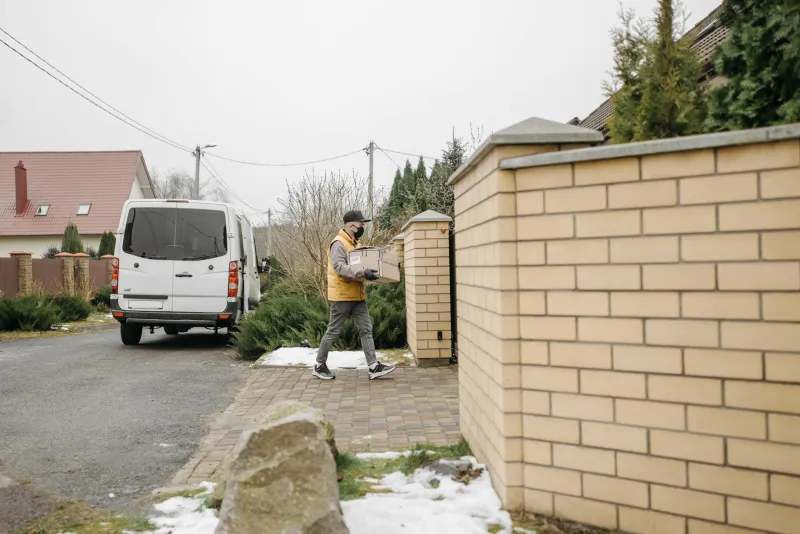
Today's delivery driver doesn't know your name, your preferences, or your neighborhood. They follow GPS directions to addresses they've never seen before, carrying food from restaurants they don't know, for customers they'll likely never meet again. The entire transaction happens through screens, mediated by algorithms that optimize for speed and profit, not relationship or community.
We pay surge pricing during busy periods—something the milkman never charged extra for, even during blizzards. We tip through apps to strangers who might not even receive the full amount. We track our orders obsessively, watching little dots move across digital maps, anxious about arrival times that were never uncertain when Mr. Henderson made his rounds.
What We Lost in Translation
The old delivery system wasn't just about convenience—it was about community infrastructure. The milkman served as informal neighborhood watch. The bread delivery created social connections between households. The vegetable cart provided fresh food access to people without cars or transportation.
These delivery people were invested in their routes because their livelihoods depended on customer satisfaction and retention. They couldn't disappear into the gig economy after a bad review. They had to face Mrs. Johnson every Tuesday morning, so they made sure the milk was fresh and the bottles were clean.
Today's system optimizes for different values: speed over relationship, variety over consistency, convenience over community. We can order cuisine from across the city, delivered within thirty minutes, from our phones. But we've lost the daily human touchpoints that once wove neighborhoods together.
The Price of Progress
The irony is profound: we dismantled a personal, relationship-based delivery system and spent decades rebuilding an impersonal, algorithm-driven version of the same service. We traded the milkman who knew our family for an app that knows our credit card number.
The old system had limitations—less variety, more rigid schedules, seasonal availability. But it also had something we're desperately trying to recreate through technology: reliability, personal service, and community connection.
Mr. Henderson never needed a five-star rating system. His reputation was built one doorstep at a time, one family at a time, one Tuesday morning at a time. That's a kind of customer service that no app can replicate, no matter how sophisticated the algorithm becomes.