From House Calls to Hold Music: How Going to the Doctor Became a Completely Different Experience
From House Calls to Hold Music: How Going to the Doctor Became a Completely Different Experience
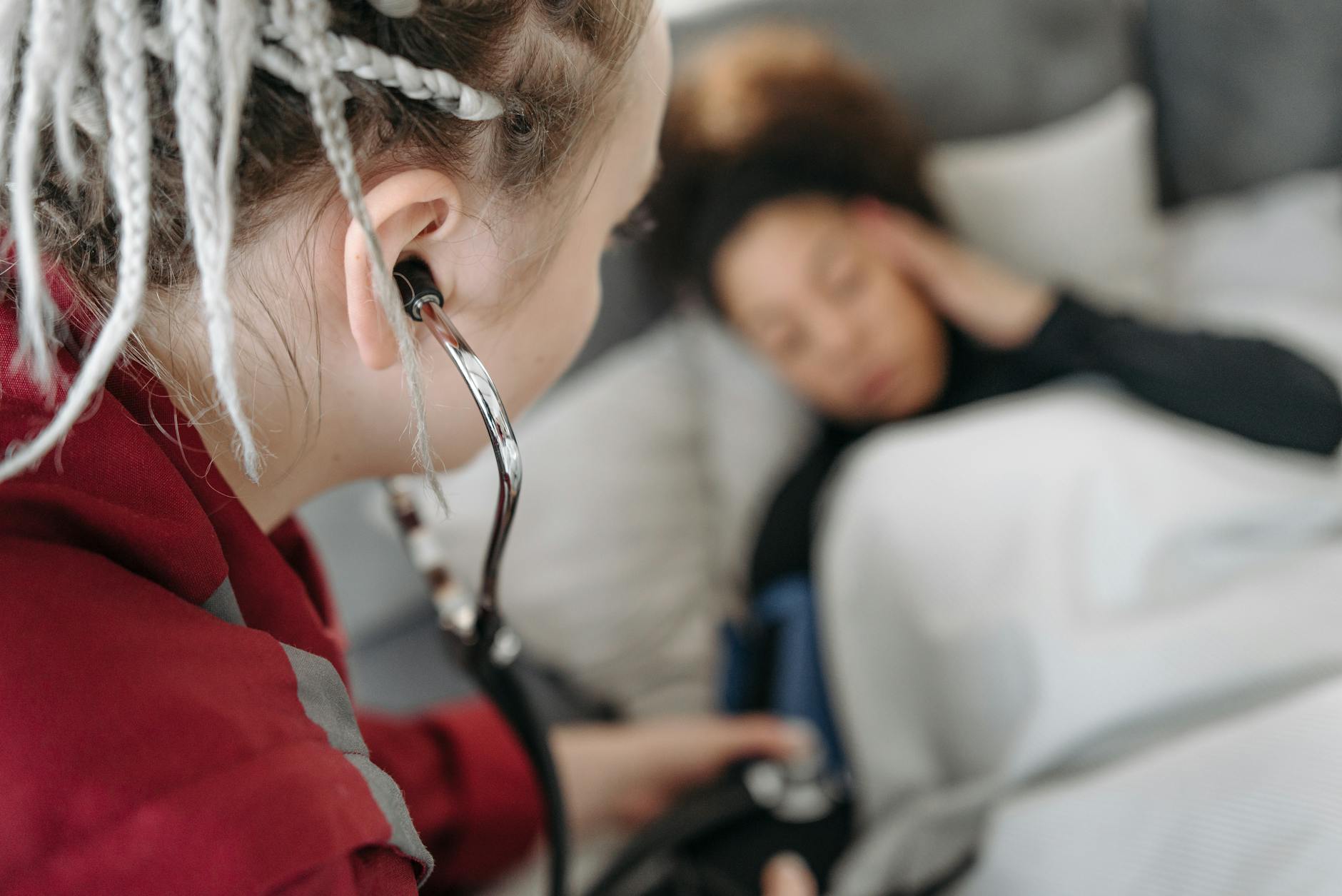
Picture this: it's 1955, somewhere in suburban Ohio. Your kid wakes up with a fever and a rattling cough. Your husband calls Dr. Harmon — the same man who delivered both your children — and by mid-afternoon, he's sitting at your kitchen table with a black leather bag, a stethoscope around his neck, and enough time to actually talk to you. He writes a prescription, takes three dollars in cash, and waves goodbye from the porch.
Now picture 2024. Same sick kid. You open an app, answer a symptom checklist, wait 40 minutes for a virtual consultation with someone you've never met, and then spend 20 minutes on hold trying to confirm whether your insurance covers the pharmacy your telehealth provider just sent a prescription to.
Something changed. Dramatically. And it happened faster than most people realize.
The Era of the Family Doctor
For much of the early-to-mid 20th century, American medicine was built on a fundamentally personal model. The family doctor was a fixture of community life — not just a clinician, but a neighbor. In rural areas and small towns especially, a single physician might serve a community for decades, building relationships across generations of the same family.
House calls were not a luxury. They were standard. The American Medical Association estimated that as late as the 1930s and 1940s, nearly 40 percent of all physician-patient interactions happened in the patient's home. Doctors carried their tools with them. Payment was direct — cash, sometimes barter in harder times — and visits were billed at rates ordinary working families could manage without financial catastrophe.
There were no insurance forms to file. No prior authorizations to chase. No referral networks to navigate. You were sick, you called your doctor, your doctor came. The relationship was the system.
When Medicine Went Corporate
The shift didn't happen overnight, but the 1960s and 1970s were a turning point. The introduction of Medicare and Medicaid in 1965 fundamentally changed the financial architecture of American healthcare. Employer-sponsored insurance, which had been growing since World War II as a way to attract workers during wage freezes, became the dominant model. Suddenly, the transaction wasn't between a patient and a doctor — it was between an insurer, a hospital system, a billing department, and eventually, somewhere in the chain, a patient.
House calls became economically unviable. Specialization surged. The general practitioner who knew your whole family gave way to a rotating cast of specialists, each responsible for a single organ or system. The patient became, in a sense, a collection of parts rather than a whole person.
By the 1980s and 1990s, managed care and HMOs tightened the screws further. Appointment times shrank. Networks got narrower. The 15-minute slot became the industry standard, barely enough time to describe a problem, let alone understand one.
The Technology Pivot
The 21st century brought tools that would have seemed like science fiction to Dr. Harmon. Electronic health records digitized patient histories. Diagnostic imaging became faster and more precise. Robotic surgery, genetic testing, targeted cancer therapies — the clinical capabilities of modern medicine are genuinely extraordinary.
And then came the smartphone. Telehealth had been developing slowly for years, but the COVID-19 pandemic compressed a decade of adoption into about six months. By mid-2020, nearly half of all medical visits in the United States were happening virtually. Apps like Teladoc and MDLive made it possible to see a doctor without leaving your couch. Wearables started feeding real-time health data to physicians before appointments even happened.
In purely clinical terms, much of this is progress. Telehealth removes barriers for people in rural areas or without reliable transportation. Virtual triage filters out cases that don't require in-person care. AI-assisted diagnostics are beginning to catch things human eyes miss.
But something quieter was lost in the transition.
What the Numbers Don't Capture
The old model had real flaws. Access was unequal — if you were Black, poor, or living in a rural county without a nearby physician, the warm mythology of the family doctor often didn't apply to you. Medical knowledge was more limited. Outcomes for serious illness were frequently worse. Nostalgia has a way of smoothing over those edges.
Still, something about the relational dimension of old-school medicine mattered in ways that are hard to quantify. Continuity of care — seeing the same doctor over years — is associated with better health outcomes, higher patient satisfaction, and lower overall costs. Trust reduces the likelihood that patients delay seeking help. Knowing someone's life context makes diagnosis more accurate.
Today, nearly a third of Americans say they don't have a primary care physician at all. They use urgent care clinics, retail health centers, and emergency rooms as their default entry point into the system. The idea of a doctor who knows your name, your history, and your family is increasingly a luxury — or a memory.
The Blink Moment
Here's the strange part: none of this felt like a single dramatic rupture. There was no moment when Americans collectively decided to trade the family doctor for an insurance network and a patient portal login. It happened in increments — a policy change here, a corporate merger there, a new billing code, a new app.
And yet, within a single lifetime, the entire experience of being sick in America has been transformed. Your grandparents called a doctor who came to their home. You navigate a website to find an in-network provider within 30 miles. Your kids might describe their symptoms to an AI before a human ever reads the transcript.
Whether that's progress, loss, or just change probably depends on which part of the system you're standing in. But it's worth pausing to notice just how completely the world shifted — before you even had a chance to blink.