House Calls and Honest Repairs: When Your TV Repairman Knew Your Family Better Than Your Doctor
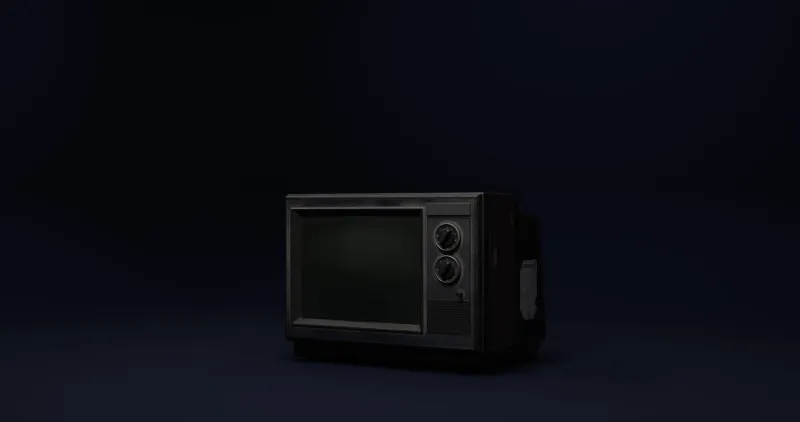
The Man with the Tube Caddy
Every Tuesday morning, Frank Kowalski would load his 1979 Chevy van with vacuum tubes, testing equipment, and a toolbox that had been his father's. The sides of his van displayed "Kowalski TV Repair" in bold letters, along with a phone number that connected directly to his kitchen table, where his wife Mary would schedule appointments in a spiral notebook.
Frank wasn't just a repairman—he was a neighborhood institution. He'd been fixing televisions in the same three zip codes for twenty-seven years, long enough to repair the same Zenith console for three generations of the Morrison family. When he knocked on your front door, toolbox in hand, you knew your television would work again, probably for another decade.
 Photo: Morrison family, via quranbook.org
This was the era when "planned obsolescence" was still a business school theory rather than standard practice. Television sets were built like furniture because that's exactly what they were—substantial pieces of living room architecture designed to last as long as the couch they sat next to.
The Economics of Keeping Things Running
In 1982, a quality 25-inch television cost about $600—roughly $1,800 in today's money. That investment commanded respect. When your Magnavox started displaying a fuzzy picture or lost the ability to receive Channel 7, you didn't consider replacement; you called Frank.
The repair visit cost $35 for the house call, plus parts and labor. Most problems were solved with a $12 vacuum tube and thirty minutes of Frank's expertise. Even major repairs—replacing the picture tube or rebuilding the power supply—rarely exceeded $150. The math was simple: repair costs were a fraction of replacement costs, so everyone repaired.
Frank's van carried an inventory of hundreds of vacuum tubes, each one fitting specific television models that had been manufactured for years with consistent components. Manufacturers published detailed service manuals because they expected their products to be repaired. Circuit boards were labeled clearly, components were accessible, and diagnostic procedures were standardized across the industry.
The House Call Experience
When Frank arrived for a repair appointment, he'd remove his shoes without being asked and spread a clean drop cloth around the television. His diagnostic process was part technical expertise, part detective work, and part performance art for the family gathered around to watch.
He'd remove the back panel of the television, revealing a landscape of glowing tubes, resistors, and capacitors that looked like a miniature city at night. Using a tube tester that resembled a small suitcase, he'd methodically check each vacuum tube, explaining his process to anyone interested enough to listen.
"See this tube here? It's running weak. Probably giving you that fuzzy picture on the higher channels." He'd slide the failing tube from its socket, insert a replacement, and suddenly the picture would snap into crystal clarity. The repair was often that simple, but the expertise required to diagnose the problem quickly separated professionals like Frank from weekend tinkerers.
Children would gather around Frank's tube tester, mesmerized by the glowing filaments and analog meters. He'd let them help by handing him tools or holding flashlights, turning each repair call into an informal lesson about how electronic devices actually worked.
The Relationship Economy
Frank knew his customers' viewing habits better than market researchers. He knew the Hendersons watched a lot of PBS because their channel selector was wearing out on position 13. He knew the Kowalskis were night owls because they'd burned through three picture tubes in fifteen years. He knew which families had teenagers because certain controls would mysteriously stop working after being adjusted too enthusiastically.
This wasn't just professional knowledge—it was community connection. Frank would ask about the kids, remember anniversaries, and sometimes stay for coffee after completing a repair. His business succeeded because he understood that television repair was about more than fixing electronic devices; it was about maintaining the centerpiece of American family life.
Customers trusted Frank completely because his reputation was literally built one living room at a time. Word-of-mouth recommendations weren't Yelp reviews from strangers—they were personal endorsements from neighbors who had watched Frank work in their homes for years.
The Death of Repair Culture
The transition from repairable to disposable electronics happened gradually, then all at once. Vacuum tubes gave way to transistors, which gave way to integrated circuits, which gave way to surface-mounted components that required specialized equipment to replace. By the 1990s, television repair had become more expensive than television replacement.
Manufacturers stopped publishing service manuals and started sealing devices with proprietary screws. Warranty stickers warned that opening the case would void all coverage. The message was clear: don't try to fix this yourself, and don't expect anyone else to fix it either.
Frank's business model became impossible when a service call cost more than a new television from Walmart. The neighborhood repair shop gave way to the big box store return policy. The craftsman who understood how things worked was replaced by the teenager who could process exchanges at customer service.
Today's Throwaway Math
Modern electronics are marvels of miniaturization and efficiency, but they're designed with built-in expiration dates. Your 65-inch smart TV cost less than Frank's customers paid for a 19-inch console in 1982, but it's also guaranteed to become obsolete within five years as streaming standards evolve and processing power requirements increase.
When today's televisions break, the repair estimate is usually delivered over the phone: "Parts and labor will run about $400, but you can get a newer model with better features for $350." The conversation ends there because the math makes replacement inevitable.
The modern repair experience involves calling a customer service number, navigating phone trees, and eventually speaking with someone reading from a script who will schedule a technician to visit your home and confirm what you already suspected: replacement is cheaper than repair.
The Skills We Lost
Frank represented a type of expertise that's nearly extinct: deep, practical knowledge about how everyday devices actually function. He could look at a schematic diagram and visualize the flow of electrons through circuits. He understood the relationship between component failure and system behavior in ways that let him diagnose problems quickly and accurately.
This knowledge was valuable because it was scarce and required years to develop. Today's repair technicians are trained to swap entire circuit boards rather than identify and replace individual components. The diagnostic process has been reduced to running automated tests and following flowcharts rather than applying accumulated wisdom.
The Environmental Cost
Frank's repair-based economy was accidentally environmental before environmentalism was mainstream. Keeping televisions running for decades meant fewer devices in landfills, less manufacturing demand, and reduced resource consumption. The repair culture extended the useful life of products far beyond their intended obsolescence.
Today's throwaway electronics culture generates millions of tons of electronic waste annually. Devices that could theoretically be repaired are discarded because repair costs exceed replacement costs. The environmental impact of this disposable approach is enormous, but it's hidden in distant manufacturing facilities and overseas disposal sites.
What We Gained and Lost
Modern electronics offer capabilities that Frank's customers couldn't have imagined: internet connectivity, voice control, and picture quality that would have seemed like magic in 1982. Today's televisions are more reliable, more efficient, and far less expensive relative to average income.
But we've lost the satisfaction of keeping things running, the relationship with skilled craftspeople who understood our devices intimately, and the economic logic that made repair preferable to replacement. We've gained convenience and lost craftsmanship, gained features and lost longevity.
Frank retired in 1997, selling his van and his tube inventory to a collector who turned the equipment into a display about obsolete professions. The notebook where Mary scheduled appointments became a historical artifact, documenting an era when Americans expected their possessions to last and knew exactly who to call when they needed fixing.