The Envelope From the Drugstore: How Waiting Two Weeks to See Your Photos Changed the Way You Remembered Them
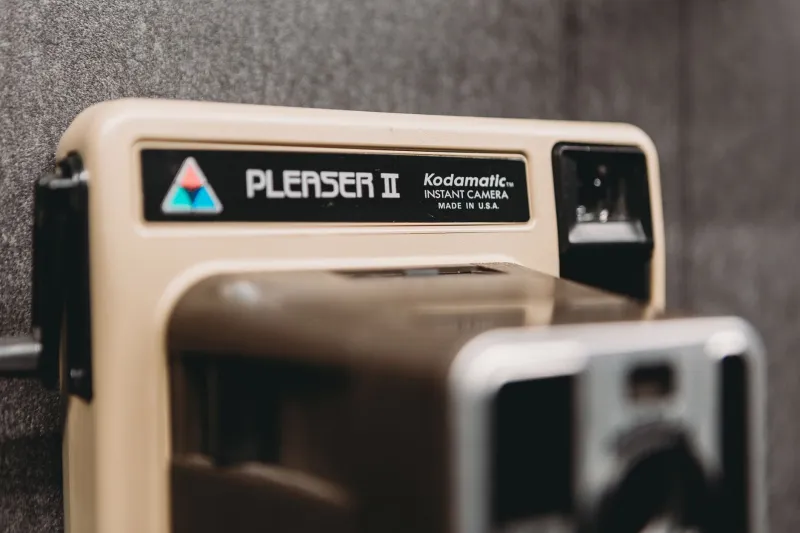
Pick up a photo from 1987 and look at it carefully. Not the image itself — the way it was taken. Whoever held that camera made a decision. They framed something deliberately, they pressed the shutter with some intention behind it, and then they moved on without knowing exactly what they'd captured. They wouldn't know for days. Maybe longer.
That not-knowing was a feature, not a flaw. We just didn't understand that until it was gone.
Twenty-Four Chances and a Lot of Patience
For most of the twentieth century, consumer photography operated under a constraint that shaped everything about how people took pictures: you had a finite number of exposures per roll of film, you couldn't see the results until the film was developed, and development cost money and took time. A standard roll gave you twenty-four or thirty-six shots. A family vacation might use two or three rolls. A birthday party, one. You chose carefully, because every frame had a cost.
When the roll was finished — or when the vacation ended and you finally got around to finishing it — you dropped the canister at the drugstore, the one-hour photo kiosk at the mall, or mailed it to a processing lab. Then you waited. A day if you were lucky and willing to pay extra. A week or two if you used the standard mail-in service. You went home and the moment continued to exist only in your memory.
When the envelope finally came back, there was a particular ritual to opening it. You flipped through the prints quickly the first time, just to see. Then you went back through more slowly. You held up the ones that came out well. You laughed at the ones that were blurry, or overexposed, or that caught someone mid-blink in a way that somehow made them more human than any posed shot. You threw some away. You kept the rest in a shoebox, or slid them into the plastic sleeves of a photo album that sat on a shelf and got looked at for years.
The Scarcity Did Something to Your Brain
Here's the thing that neuroscience has been quietly confirming for the past decade: the act of waiting to see a photo actually strengthened the memory of the moment it captured.
When you take a picture and immediately look at it on your phone screen, your brain partially offloads the memory of the event to the device. Researchers call it the photo-taking impairment effect — the phenomenon where photographing something reduces how well you actually remember it. The camera becomes a cognitive substitute for your own memory formation. You saw it, you captured it, your brain files it as handled.
But when you took a picture in 1985 and didn't see it for two weeks, your brain had no choice but to do the remembering itself. You replayed the moment. You described it to people. You held it in your head. By the time you saw the print, you'd already built a memory — and the photo became a confirmation of something you'd already processed, not a replacement for processing it.
The delay created depth. The scarcity created intention.
The Ones That Didn't Come Out
Anyone who shot film long enough has a story about a roll that didn't come back the way they hoped. The Christmas morning where half the shots were blurry because the living room was too dark. The graduation photo where someone walked through the frame at exactly the wrong moment. The vacation picture where you were absolutely certain you'd captured something beautiful and what came back was an overexposed blur of light and sky.
This was frustrating. It was genuinely disappointing. And it also taught you something.
It taught you that capturing a moment wasn't guaranteed. That the camera was a tool with limits, and so were you. That some things would only exist in memory, not in print, and that was just how it was. You learned to look more carefully. You learned to think about light. You learned to take the important shot twice, just in case, and to not waste a frame on something you didn't actually care about.
The discipline that film photography demanded — born entirely from its limitations — produced better photographers and, arguably, more honest records of the moments people chose to document. Nobody burned through a roll of film on their lunch. You saved the shots for things that mattered.
What Infinite Looks Like From the Other Side
None of this is an argument against digital photography, which has genuinely democratized picture-taking in extraordinary ways. The ability to photograph your kid's first steps without worrying about whether you've got enough exposures left is an unambiguous good. The ability to check your framing immediately and retake a shot that didn't work is useful. The ability to back up ten thousand photos to a cloud server means that a house fire doesn't erase your family's visual history.
But something real shifted when the constraint disappeared. The average American now takes more photographs in a single week than a family in 1975 took in a year. We document everything and curate almost nothing. The photos exist, technically — billions of them, sitting in phone storage and cloud libraries that most people never actually look at. They're captured. They're just not kept, not in any meaningful sense.
The shoebox full of drugstore prints might seem quaint now. But those prints got looked at. They got passed around at Thanksgiving. They got tucked into birthday cards and mailed to relatives. They ended up framed on walls and stuck to refrigerators with magnets. They were physical objects in the world, not files in a folder nobody opens.
The two-week wait for that yellow envelope wasn't just an inconvenience. It was, it turns out, part of how you remembered the thing you were waiting to see.