The Last Free-Range Generation: When American Kids Disappeared Until Dinnertime and Nobody Called the Police
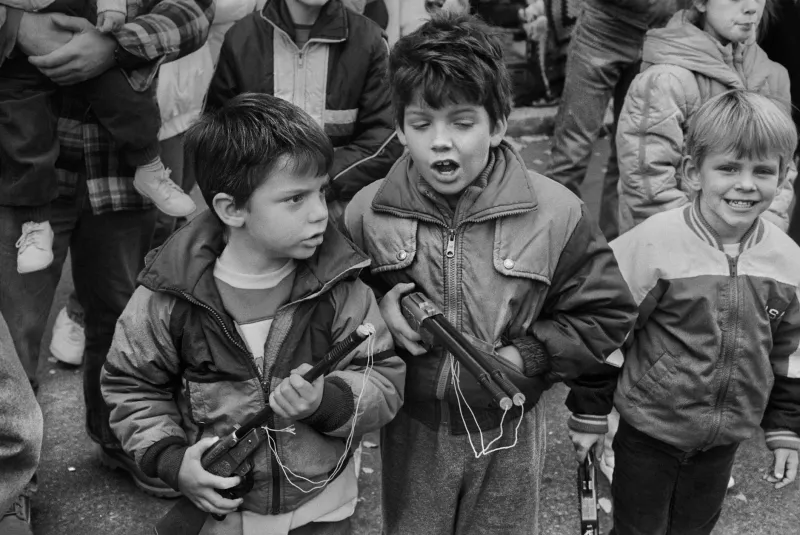
"Be home when the streetlights come on." For millions of American children in the 1970s and 1980s, this was the extent of parental supervision during summer vacation. No cell phones, no GPS tracking, no scheduled activities — just the freedom to disappear into the neighborhood until hunger or darkness drove them home.
That childhood is now extinct.
When Summer Meant Freedom
The typical summer day for a 1980s kid began with a bowl of cereal and ended twelve hours later with grass stains and scraped knees. In between, children created their own adventures. They built forts in vacant lots, organized pickup baseball games in the street, and explored every creek, construction site, and abandoned building within bike-riding distance.
Parents didn't know where their children were, and they didn't expect to. The neighborhood itself was the babysitter. Mrs. Johnson might hose down overheated kids in her backyard, Mr. Peterson would chase them away from his prized tomatoes, and the teenager at the corner store kept an informal eye on the youngest ones buying penny candy.
This wasn't neglect — it was normal. Children as young as six or seven routinely walked to school, rode bikes across town, and spent entire days outside adult supervision. The expectation was simple: don't get hurt, don't cause trouble, and be home for dinner.
The Architecture of Independence
The physical environment supported this independence. Neighborhoods were designed for walking and biking, with sidewalks, shortcuts through backyards, and gathering places like parks and corner stores within easy reach. Children knew every alley, every friendly dog, every house where they could get a drink of water.
Schools reinforced this independence. Children walked or biked to school regardless of weather, carried their own lunch money, and resolved playground conflicts without adult intervention. The idea that parents would drive children to school, walk them to classrooms, or schedule "playdates" with other families would have seemed absurd.
Summer vacation meant exactly that — vacation from structure, supervision, and scheduled activities. Children were expected to entertain themselves, and they did. They created elaborate games that lasted for weeks, formed neighborhood clubs with secret passwords, and developed the kind of deep friendships that only form when you have unlimited time to just be together.
The Great Retreat Indoors
The shift began gradually in the 1990s and accelerated through the 2000s. A series of highly publicized child abductions, despite statistical evidence that children were actually safer than previous generations, fundamentally changed how Americans thought about childhood safety. The rare became the expected, and caution became the default parenting mode.
Simultaneously, liability culture transformed how institutions dealt with children. Schools eliminated playground equipment deemed too dangerous, organized sports required waivers and insurance, and public spaces became increasingly regulated. The informal networks of community supervision that once watched over neighborhood children were replaced by formal programs with background checks and certification requirements.
Technology accelerated the change. Video games, cable television, and later the internet provided compelling indoor alternatives to outdoor exploration. Why ride bikes to the creek when you could battle dragons on a computer screen? Why organize neighborhood games when PlayStation offered perfectly balanced competition?
Today's Supervised Childhood
Modern American children live remarkably structured lives. Their days are scheduled in 30-minute increments, moving from school to tutoring to soccer practice to music lessons. Free time is rare, and truly unsupervised time is nearly nonexistent.
Parents track children's locations through smartphone apps, communicate with teachers through digital portals, and schedule social interactions through carefully coordinated "playdates." The idea of children simply knocking on doors to see who can come outside to play has become foreign to many families.
This supervision comes with costs that extend beyond childhood. Today's young adults often struggle with independence, decision-making, and risk assessment — skills that previous generations developed naturally through years of unsupervised exploration and self-directed play.
The Safety Paradox
Here's the uncomfortable truth: by most measures, the world hasn't become more dangerous for children. Crime rates, including crimes against children, have generally declined since the 1970s. Traffic fatalities involving children have decreased. Even playground injuries have dropped as equipment has become safer.
What changed wasn't the actual level of danger, but our perception and tolerance of risk. The 24-hour news cycle made rare tragedies feel common, while social media amplified parental anxieties. The result is a generation of children who are statistically safer than ever but practically less free than any previous generation.
What We've Lost
The supervised childhood offers undeniable benefits: more educational opportunities, better safety equipment, increased awareness of previously ignored dangers. But it's also eliminated experiences that shaped character in ways we're only beginning to understand.
Children no longer learn to navigate social conflicts without adult mediation, assess physical risks through trial and error, or develop the deep sense of place that comes from thoroughly exploring their environment. They're more protected but also more dependent, more scheduled but also more anxious.
The Price of Protection
The last free-range generation is now raising children of their own, and many recognize what's been lost. Some are consciously trying to restore elements of independent childhood, but they're swimming against powerful cultural currents that equate good parenting with constant supervision.
The children who once disappeared until dinnertime grew up to become resourceful, resilient adults. They learned to solve problems, take calculated risks, and find joy in simple pleasures. Whether today's carefully supervised children will develop these same qualities remains an open question.
Somewhere between the streetlights coming on and the smartphone notifications pinging, American childhood changed forever. And most of us didn't notice until it was already gone.