Twenty-Four Chances to Get It Right: When Photography Required Thought Instead of Storage Space
The Weight of Every Frame
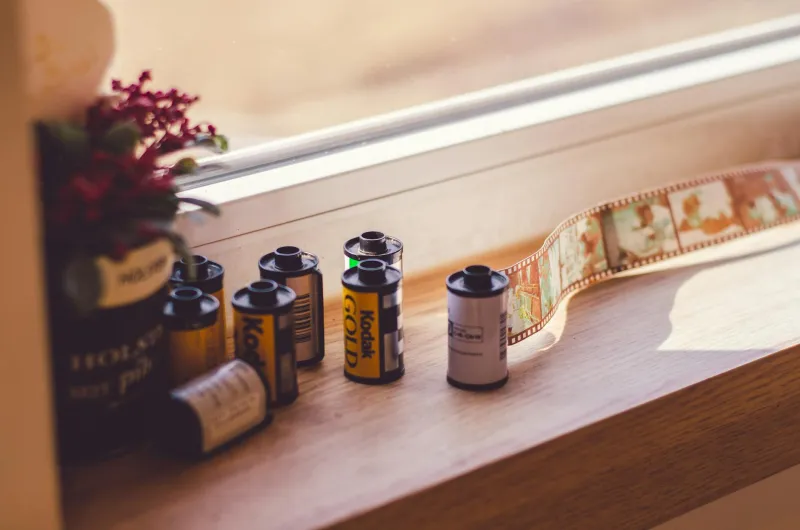
Christmas morning, 1987. Dad loads a fresh roll of Kodak film into the family camera, carefully threading the leader through the take-up spool. "Thirty-six shots," he announces to the gathered family. "Make them count." This wasn't a suggestion—it was economic reality wrapped in holiday tradition.
That single roll of film represented a significant investment: $8 for the film, another $12 for developing and printing. In today's money, that's roughly $45 to capture one family celebration. Every click of the shutter carried financial weight, turning photography from casual documentation into deliberate curation.
The camera stayed in its case most of the year, emerging for birthdays, holidays, and special occasions deemed worthy of permanent preservation. Taking photos required planning, intention, and careful consideration of what moments deserved to become memories.
The Ritual of Restraint
Film photography imposed natural limits that shaped how Americans thought about capturing their lives. You couldn't see what you'd photographed until the roll was finished and developed—sometimes weeks later. No instant preview, no delete button, no second chances if someone blinked or moved at the wrong moment.
This uncertainty created its own discipline. Photographers learned to observe carefully before shooting. They considered composition, lighting, and timing because retakes were expensive. The phrase "hold that pose" meant something when you only had one shot to get it right.
Families developed informal protocols around photo-taking. Who would operate the camera? Which events warranted documentation? How many shots could you afford to "waste" on experimental angles or candid moments? These decisions happened consciously, collectively, with full awareness of their financial implications.
The Darkroom Lottery
Dropping off film for development was like buying a lottery ticket—you never knew what you'd won until the photos came back. That envelope from the photo lab contained genuine surprises: unexpected expressions, forgotten moments, and the occasional masterpiece that emerged from careful timing and good luck.
But it also contained disappointments that couldn't be undone. Blurry shots, over-exposed frames, photos where someone's head was cut off or their eyes were closed. These weren't digital mistakes you could immediately correct—they were permanent records of imperfect moments, often kept anyway because they represented irreplaceable time and money.
The photo lab became a neighborhood institution where anticipation and anxiety mixed in equal measure. Waiting three to five days for development created suspense that made successful photos feel like genuine achievements. Opening that envelope was a moment of revelation that today's instant gratification can't replicate.
Curation by Necessity
With only 24 or 36 shots per roll, every family became expert curators of their own lives. Photo albums weren't just storage—they were carefully selected highlights representing months or years of living. Each image had survived multiple filters: the initial decision to take the shot, the development process, and the final selection for album inclusion.
This scarcity created value. Photos were precious because they were rare and expensive to create. Families gathered around photo albums with reverence, studying each image carefully because there weren't hundreds of similar shots to scroll through. Every photo told a specific story because it had been deliberately chosen to represent a moment worth preserving.
The physical nature of photographs—actual objects you could hold, pass around, and accidentally damage—made them feel substantial in ways that digital files never could. A photo album was a curated exhibition of a family's most important moments, not a comprehensive archive of everything that happened.
The Death of Photographic Intention
Today's smartphones contain more photographic power than professional studios once possessed, yet somehow our photos feel less significant. The average American now takes over 3,000 photos per year—more than most families took in an entire decade during the film era.
This abundance has fundamentally changed our relationship with captured memories. When storage is infinite and costs are invisible, every moment becomes worth photographing. We document meals, outfits, mundane activities, and fleeting thoughts with the same casual frequency that previous generations reserved for major life events.
The result is a paradox of plenty: we have more photos than ever before, but most of them remain unviewed, unprinted, and ultimately unmemorable. Our phones contain thousands of images that will never be looked at again, let alone carefully preserved in physical albums.
The Burden of Infinite Choice
Digital photography eliminated the constraints that once made photo-taking meaningful. No film costs, no development delays, no limit on how many shots you can take. This freedom was supposed to make photography better, more accessible, more democratic. Instead, it created new problems that the film era never faced.
We now suffer from choice paralysis when trying to select photos for printing or sharing. With hundreds of similar shots from a single event, how do you choose which moments deserve preservation? The careful curation that scarcity once imposed must now be recreated artificially, through conscious effort rather than economic necessity.
Most digital photos exist in a state of permanent limbo—stored but not displayed, captured but not curated, preserved but not particularly valued. They represent moments we thought worth remembering but lack the intentionality that once made photographs meaningful.
What We Lost in the Digital Flood
The film era's constraints weren't just technical limitations—they were creative catalysts that shaped how Americans thought about memory, documentation, and the value of captured moments. When every photo cost money and required deliberate action, photography became an act of conscious preservation rather than reflexive documentation.
Those 24 or 36 exposures per roll created natural storytelling frameworks. Families learned to think photographically: What story are we telling? Which moments matter most? How can we capture the essence of this experience within our limited frames?
The wait for development added anticipation and value to the photographic process. The physical nature of prints made photos into objects worth preserving, organizing, and sharing. The inability to immediately review or delete shots meant that imperfect photos often became cherished reminders of authentic, unguarded moments.
The Weight of Intentional Memory
Film photography taught Americans that not every moment needed to be captured, but the ones worth capturing deserved careful attention. It created a culture where photographs were treasured because they were rare, where photo albums told coherent stories because space was limited, and where the act of taking a picture required genuine thought about what made a moment worth preserving.
Today's infinite digital storage has solved the technical problems of photography while creating new challenges around meaning, value, and intentionality. We've gained the ability to capture everything and lost the discipline that helped us understand what was worth capturing in the first place.
The camera with 24 shots didn't just limit how many photos you could take—it forced you to think about why you were taking them. That constraint, more than any technical advancement, may have been what made those old family albums feel so much more meaningful than the thousands of unviewed photos currently sitting in our digital clouds.