When Boredom Was Just Part of Life: The Lost Art of Doing Absolutely Nothing
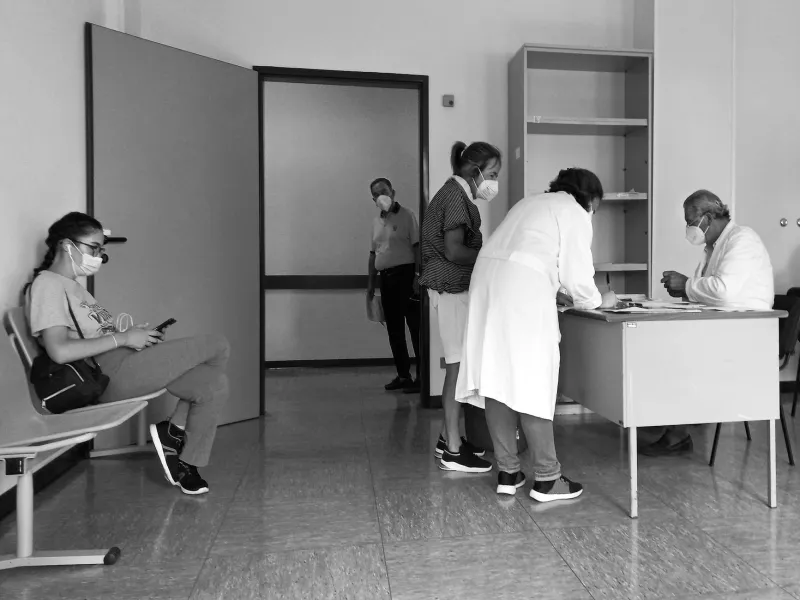
The Long Wait at Dr. Peterson's Office
It's Tuesday afternoon, 1987. You're sitting in Dr. Peterson's waiting room for your annual physical, and you're running twenty minutes behind schedule. The receptionist apologizes with a shrug — the doctor got held up with another patient.
So you settle in. There's a stack of magazines on the coffee table: Time from three months ago, a People from last Christmas, and a National Geographic that might be older than you are. You flip through the Time, even though you remember most of these stories. Then you people-watch a little. An elderly man reads the same page of Reader's Digest for ten minutes. A mother quietly shushes her fidgeting toddler.
You check your watch. Still ten minutes to go, probably more. You lean back in your chair and just... wait. Your mind wanders. You think about what you need to pick up at the grocery store, wonder how your sister's job interview went, notice how the afternoon sunlight hits the office plants.
Twenty-seven minutes later, the nurse calls your name. You weren't entertained, exactly, but you weren't miserable either. Waiting was just part of life, like traffic lights or commercials. You dealt with it.
The Fidget Generation
Fast-forward to today's waiting room, and that scene plays out completely differently. The magazines are still there — probably the same ones, honestly — but nobody's reading them. Every person in the room is staring at a glowing rectangle, frantically scrolling, tapping, swiping.
A notification doesn't arrive for thirty seconds, and fingers start getting itchy. Someone's phone battery hits 20%, and they actually ask the receptionist if there's a charger they can borrow. The idea of sitting still with nothing but their own thoughts for company has become genuinely uncomfortable.
We've trained ourselves to fear empty moments. A red light that lasts more than sixty seconds triggers an almost Pavlovian reach for the phone. Standing in line at the grocery store without scrolling through something feels wasteful, even wrong.
When Airports Were for Thinking
Consider the airport gate area, once a masterclass in collective patience. Travelers would arrive early, claim a seat, and settle in for what might be hours of unstructured time. Some read books — actual paper books they'd packed specifically for the journey. Others wrote postcards, balanced checkbooks, or struck up conversations with strangers.
Flight delays were frustrating, but they weren't existential crises. People adapted. They found ways to pass time that didn't require batteries or Wi-Fi. They looked out windows, watched other travelers, or simply sat quietly with their thoughts.
Today's airport delays trigger a different kind of panic. Not just frustration about missed connections, but genuine anxiety about being disconnected or under-stimulated. Gate areas are filled with people desperately hunting for power outlets, not because their phones are dead, but because they might die in the next two hours.
The Death of Downtime
Somewhere in the transition from analog to digital life, we lost the ability to be comfortably bored. What psychologists call "downtime" — periods of unstimulated rest when the mind can wander freely — has been systematically eliminated from daily experience.
Every potential moment of boredom now has a digital solution. Waiting for the bus? Check Instagram. Commercial break? Scroll through TikTok. Walking to the mailbox? Listen to a podcast. We've optimized away the empty spaces where thoughts used to form naturally.
This isn't entirely negative. We have access to more information, entertainment, and social connection than any generation in human history. Boredom, in many ways, was a luxury problem — the complaint of people whose basic needs were met and who had time to kill.
What Boredom Actually Did for Us
But research suggests that those unstimulated moments served important psychological functions. Boredom often preceded creativity. When the mind wasn't occupied with external input, it made internal connections. People solved problems, planned futures, and processed experiences during those supposedly "wasted" moments.
The long car rides of childhood, when kids were trapped in backseats with nothing but scenery and siblings for entertainment, forced young minds to create their own amusement. They invented games, told stories, or simply daydreamed. These experiences built tolerance for unstimulated time and developed internal resources for self-entertainment.
Today's children, equipped with tablets and streaming services from toddlerhood, rarely experience genuine boredom. They're never forced to develop those internal resources because external stimulation is always available.
The Social Cost of Constant Stimulation
The elimination of boredom also eliminated many casual social interactions. Waiting rooms, bus stops, and grocery store lines once provided natural opportunities for small talk with strangers. Shared boredom created temporary communities of people killing time together.
Now those same spaces feel antisocial. Everyone's absorbed in their personal entertainment stream, wearing earbuds or staring at screens. The brief human connections that used to form during shared waiting experiences have been replaced by individual digital bubbles.
Even family time has been affected. The car rides that once forced families to talk, sing songs, or play word games now feature individual entertainment systems. Parents and children can travel for hours in the same vehicle while consuming completely different media.
The Attention Span Crisis
Perhaps most significantly, our flight from boredom has reshaped our attention spans. The ability to sit quietly without stimulation for extended periods — something previous generations took for granted — now feels almost superhuman.
Meditation apps have become billion-dollar businesses partly because they're trying to teach adults skills that used to develop naturally: the ability to be present in unstimulated moments, to observe thoughts without immediately acting on them, to find peace in stillness.
We're essentially paying for guided practice in something our grandparents did automatically while waiting for the bus.
The Irony of Infinite Entertainment
The strangest part of this transformation is that infinite entertainment options haven't made us more satisfied or less restless. If anything, the constant availability of stimulation has made us more dependent on it. The fear of missing out extends even to missing out on the next video, the next article, the next notification.
We solved the problem of boredom so completely that we created a new problem: the inability to be unbored. What started as a convenience — having something to do during waiting periods — became a compulsion.
Before We Lost the Art of Waiting
There's something poignant about those old waiting room scenes. Not because waiting was pleasant — it rarely was — but because people could do it without panic. They possessed a kind of mental resilience that we've systematically trained out of ourselves.
They knew how to exist in unstimulated moments without feeling like they were wasting time or missing something important. They could sit with their thoughts, however uncomfortable or mundane those thoughts might be.
We gained the ability to be constantly entertained, informed, and connected. We lost the ability to be comfortably alone with ourselves. Most of us didn't even notice the trade-off happening.
Before we blinked, boredom became extinct, and we forgot that sometimes the best thoughts come from the worst magazines.