When Cars Spoke English: How Your Neighborhood Garage Became a Computer Lab
The Sound of Diagnosis
Walk into any auto repair shop today and you'll hear the soft hum of computers, the beep of diagnostic scanners, and the frustrated sighs of mechanics squinting at error codes. But step back forty years, and the soundtrack was completely different. You'd hear the throaty rumble of an engine being revved, the sharp ping of metal being tapped, and most importantly, the confident voice of a mechanic saying, "Yep, I know exactly what's wrong."
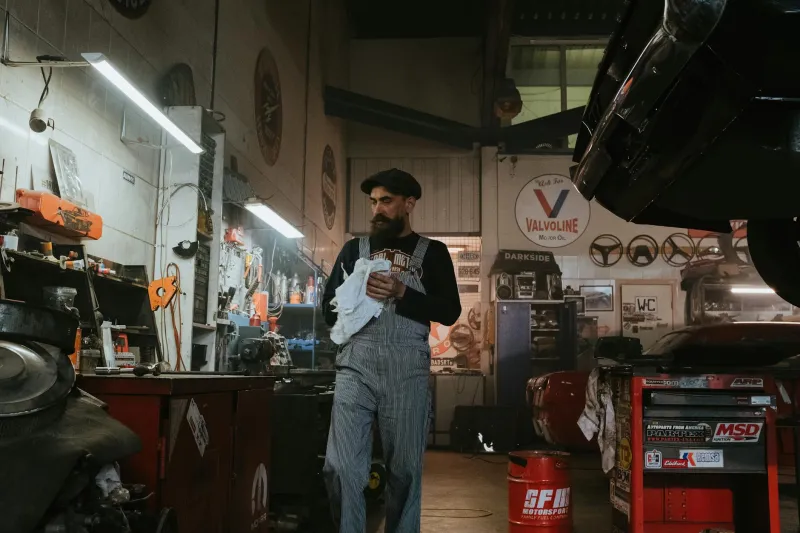
Back then, cars had personalities. A 1975 Chevy Nova didn't just break down—it wheezed, knocked, or shuddered in ways that told a story to anyone who knew how to listen. Your neighborhood mechanic, usually a guy named Frank or Joe who'd been under hoods since he was twelve, could diagnose most problems without even popping the hood. The way your car started, the color of the exhaust, the particular rattle when you turned left—these were clues in a language that skilled mechanics spoke fluently.
The Handshake Economy
Those corner garages weren't just businesses; they were institutions. Frank knew your car's history because he'd been working on it for years. He remembered that transmission flush from last spring, knew your driving habits, and could spot when something was off just by watching you pull into his bay. The relationship was built on trust, reputation, and the understanding that a good mechanic was worth his weight in gold.
Payment was often as simple as the repair itself. You'd get a handwritten estimate on a grease-stained piece of paper, Frank would explain what was wrong in plain English, and you'd shake hands on it. No service advisors, no computer printouts with mysterious line items, no waiting three days for parts to be shipped from Germany. If Frank didn't have the part, he'd call around to local junkyards or machine shops. Half the time, he'd fabricate something that worked just as well as the original.
When Everything Changed
The transformation didn't happen overnight. It crept in during the 1980s and 1990s as cars became increasingly computerized. What started as simple emissions controls evolved into engine management systems, anti-lock brakes, traction control, and eventually, vehicles that are essentially smartphones on wheels.
Today's cars don't just break—they throw codes. P0301, P0420, B1342—a cryptic alphabet soup that requires expensive diagnostic equipment to decode. That equipment, which can cost tens of thousands of dollars, often needs regular updates and manufacturer-specific software. The days of Frank diagnosing your engine knock by ear are over because engines don't knock anymore—they just shut down and display a message on your dashboard.
The New Mechanics
The modern auto technician is part computer programmer, part electrician, and part traditional mechanic. They need certification for different manufacturer systems, must stay current with constantly evolving technology, and often spend more time staring at screens than getting their hands dirty. It's not that they're less skilled—in many ways, they're more skilled than ever. But they're operating in a completely different world.
Walk into a dealership service department today and you'll find technicians who specialize in specific systems. One person handles transmissions, another works only on electrical systems, and a third focuses on engine diagnostics. The guy who used to fix everything on your car has been replaced by a team of specialists, each armed with laptop computers and manufacturer-specific tools.
The Right to Repair Revolution
This technological evolution has created an unexpected casualty: the independent garage. Many of today's repairs require proprietary diagnostic tools and software that only authorized dealers can access. Want to program a new key fob? That'll require a trip to the dealer. Need to calibrate your backup camera after a fender bender? Dealer only. Even changing brake pads on some luxury vehicles requires special software to reset the brake system's computer.
The result is that Frank's garage, if it survived at all, has been relegated to oil changes, tire rotations, and basic maintenance. The complex repairs—the ones that pay the bills—increasingly flow to dealership service departments or specialized shops with six-figure diagnostic equipment investments.
What We Lost in Translation
The shift from mechanical to digital didn't just change how cars get repaired—it changed our relationship with our vehicles entirely. In Frank's day, curious car owners could learn to do basic repairs themselves. You could buy a Chilton manual, borrow some tools, and tackle everything from brake jobs to engine rebuilds in your driveway on Sunday afternoons.
Today's cars actively resist such tinkering. Tamper-proof screws, sealed units, and software locks have turned the family car into a black box that only authorized technicians can open. We've gained reliability, efficiency, and safety features our grandparents couldn't have imagined. But we've lost something intangible: the satisfaction of understanding the machine that gets us where we're going.
The Price of Progress
Modern vehicles are marvels of engineering that our 1975 Nova-driving ancestors would find incomprehensible. They start reliably, run cleanly, and can drive hundreds of thousands of miles with minimal maintenance. They're safer, more efficient, and packed with features that make driving easier and more comfortable.
But they've also become appliances—sophisticated ones, but appliances nonetheless. We use them without understanding them, and when they break, we're completely dependent on specialists to fix them. The mechanic who knew your name has been replaced by service advisors who know your customer number.
In the space of a generation, we traded the warm familiarity of Frank's garage for the clinical efficiency of the modern service center. We gained precision and lost personality. We got better cars, but we lost the simple pleasure of understanding how they worked.
Sometimes progress feels an awful lot like loss.