Remember When Your Mechanic Actually Remembered You? How Car Service Became Corporate
The Guy Who Knew Your Car's Middle Name
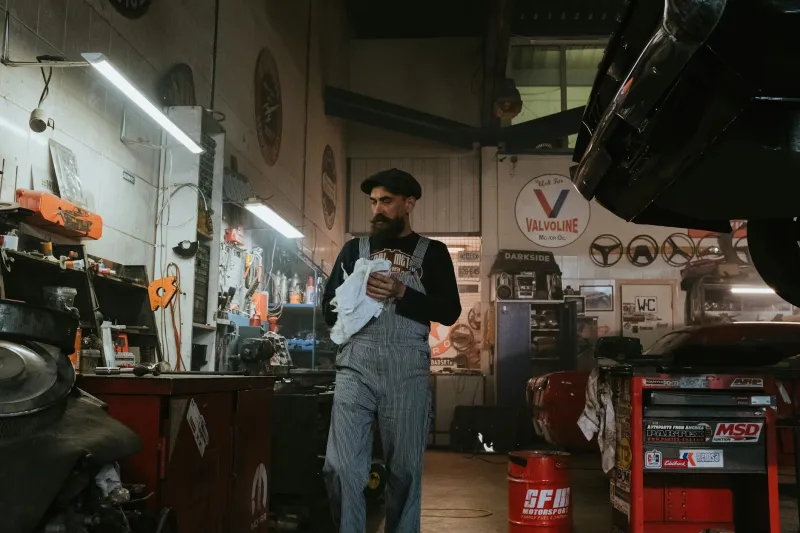
Pull into Murphy's Garage on Elm Street in 1985, and Murphy himself would wave from under the hood of a Buick. "How's that transmission been treating you, Mrs. Johnson?" he'd call out, wiping his hands on coveralls that had seen more oil changes than most people see birthdays. Murphy remembered that your Oldsmobile made a funny noise when it rained, that your husband always forgot to check the air pressure, and that your teenage son had a heavy foot on the accelerator.
This wasn't exceptional service — it was just service. Across America, neighborhoods had their Murphy. Maybe yours was called Tony's Auto Repair or Sam's Service Station. The name didn't matter. What mattered was that when something went wrong with your car, you knew exactly where to go and exactly who would fix it.
When Car Problems Had Simple Solutions
Back then, car trouble followed a predictable script. You'd notice something off — a weird sound, a rough idle, maybe the car pulling to one side. You'd drive over to the local garage, probably the same day. No appointment necessary.
Your mechanic would pop the hood, listen to the engine, maybe take it for a quick spin around the block. Within twenty minutes, he'd have a diagnosis and a price. "Needs new brake pads, should run you about forty bucks with labor." You'd leave the car, walk to the diner next door for coffee, and pick it up that afternoon.
The bill was handwritten on a carbon-copy invoice. The labor charge was fair because your mechanic knew you'd be back for your next oil change, your next inspection, your next problem. Repeat customers were the lifeblood of the business, which meant treating people right wasn't just good manners — it was good business.
The Rise of the Service Advisor
Today's car service experience begins with a phone call to schedule an appointment. Not for next week — try next month. The dealership's automated system will offer you 7:30 AM on a Tuesday three weeks from now, which you'll take because the alternative is 2:15 PM on a Thursday in six weeks.
When you finally arrive, you don't meet a mechanic. You meet a service advisor — someone in a polo shirt with a tablet who's never changed oil but knows every extended warranty option in the computer system. They'll take your keys, ask you to describe the problem, and input your concerns into a digital work order that will be forwarded to a technician you'll never see.
The mechanic working on your car might be excellent, but they don't know you from the hundreds of other customers whose vehicles cycle through the service bays. Your 2019 Honda Civic isn't Mrs. Johnson's reliable daily driver with the quirky transmission — it's work order #47291, a VIN number in the system.
When Everything Became a Computer Problem
Modern cars are essentially computers on wheels, which has fundamentally changed how they get fixed. Today's mechanics — now called automotive technicians — spend as much time staring at diagnostic screens as they do looking under hoods. That's not necessarily bad; these tools can identify problems that would have stumped Murphy back in the day.
But it's created a world where simple problems require complex solutions. A check engine light that might have meant "clean the carburetor" in 1985 now triggers a diagnostic protocol that costs $150 just to identify the issue. The actual fix might be simple, but getting there requires plugging into the car's computer system and running through manufacturer-specific procedures.
This technological complexity has pushed independent mechanics toward specialization or out of business entirely. The equipment needed to properly diagnose and repair modern vehicles costs tens of thousands of dollars and requires constant updates. Many neighborhood garages simply couldn't keep up.
The Upsell Economy
Perhaps the biggest change isn't technological — it's economic. Today's dealership service departments operate as profit centers, not just customer service operations. Service advisors are trained to identify additional revenue opportunities during every visit.
Came in for an oil change? Your air filter looks a little dirty, your brake fluid could use flushing, and when was the last time you had your transmission serviced? That $29.99 oil change becomes a $400 maintenance package faster than you can say "I just need the oil changed."
None of these recommendations are necessarily wrong, but they represent a fundamental shift from the old model where your mechanic's reputation depended on not overselling customers who lived in the same town and would remember being taken advantage of.
What We Lost in Translation
The efficiency gains are real — modern service centers can handle more cars, diagnose problems more accurately, and fix issues that would have required complete engine rebuilds in the past. But something important disappeared in the translation from personal service to corporate efficiency.
We lost the mechanic who knew that your car's little quirks weren't problems to be fixed but personality traits to be understood. We lost the ability to walk in without an appointment and have someone take a quick look. We lost the handshake deals and the honest assessments from someone whose business depended on your trust.
Most of all, we lost the peace of mind that came from having a automotive relationship instead of just automotive transactions. Murphy's Garage is probably a Starbucks now, and Murphy himself is probably retired. But somewhere in America, there's still a Mrs. Johnson driving an old car, wishing she had someone who remembered her name and knew exactly what that funny noise meant when it rained.
The End of an Era
The transformation of car service from personal to corporate wasn't planned — it evolved from changes in technology, business consolidation, and consumer expectations. We gained diagnostic precision and lost personal connection. We gained efficiency and lost simplicity.
It's progress, but it's also a loss. Because sometimes, the most advanced diagnostic tool isn't a computer — it's a mechanic who's been listening to engines for thirty years and knows the difference between a problem and a personality.