When Movies Came to Your Car Window: America's Lost Love Affair with Drive-In Theaters
Picture this: It's 1965, and your family of five piles into the station wagon with blankets, homemade popcorn, and maybe a cooler of sodas. You drive up to a 20-foot-tall screen in an open field, park between two metal posts, and hook a tinny speaker to your car window. For two dollars — total, not per person — you're about to watch a double feature under a canopy of stars.
This wasn't some special occasion. This was Friday night in America.
The Golden Age of Outdoor Cinema
The drive-in movie theater represented something uniquely American: the marriage of our love for cars and entertainment. At their peak in the late 1950s, over 4,000 drive-in theaters operated across the United States. They weren't just movie venues — they were community gathering places where teenagers had their first dates, families created lasting memories, and entire towns came together under the open sky.
The economics were beautifully simple. Land was cheap, especially on the outskirts of growing suburbs. A drive-in required minimal infrastructure — essentially a large screen, a projection booth, and rows of speaker posts. The car-centric design eliminated the need for expensive seating, elaborate lobbies, or climate control systems.
Families could attend without the financial strain that modern movie-going creates. That two-dollar admission covered everyone in the vehicle, making it possible for large families to enjoy entertainment together. Parents could bring restless toddlers without worrying about disturbing other patrons, and teenagers found the perfect balance of parental supervision and independence.
More Than Just Movies
Drive-ins offered something that today's multiplexes can't replicate: genuine community atmosphere. Many featured playgrounds beneath the massive screens, where children could burn off energy before the main feature began. The intermission wasn't just a bathroom break — it was a social event where neighbors caught up, teenagers flirted, and the concession stand became the town square.
The programming reflected this community spirit. Drive-ins often showed double features, giving families an entire evening's entertainment. Horror movies became a rite of passage for teenagers, while Disney films drew multi-generational audiences. The experience wasn't just about what was on screen — it was about being there together.
When the Lights Went Out
The decline began in the 1970s and accelerated through the 1980s. Rising real estate values made those large plots of land too valuable for movie theaters. Suburban sprawl pushed drive-ins further from population centers, while shopping malls and multiplexes offered year-round, weather-proof alternatives.
The shift to daylight saving time dealt another blow — movies couldn't start until after 9 PM during summer months, pushing double features well past midnight. Meanwhile, the rise of VCRs and later DVDs gave families affordable home entertainment options that didn't require leaving the house.
But perhaps the most significant factor was cultural. The drive-in represented an era when Americans were comfortable with slower, simpler pleasures. The experience required patience — arriving early to get good spots, waiting for darkness, accepting that weather might interfere with plans. As society became more focused on convenience and instant gratification, the drive-in's charms began to feel like inconveniences.
What We Traded Away
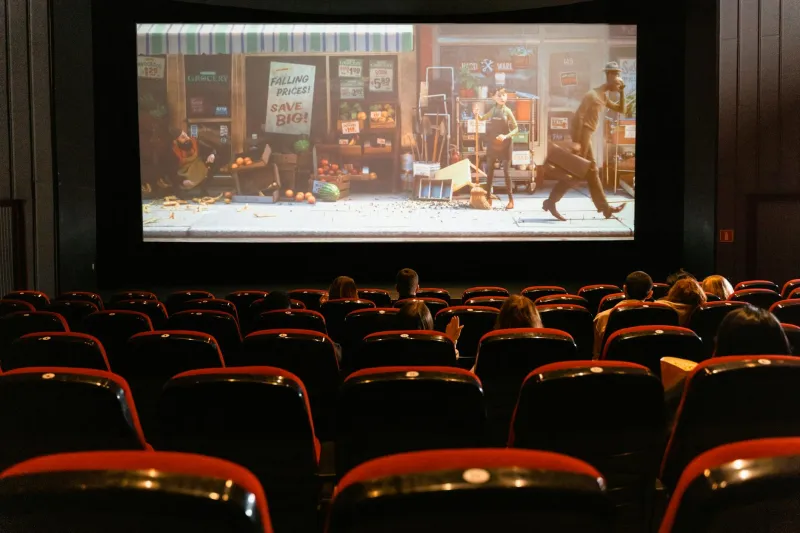
Today, fewer than 300 drive-in theaters remain in the United States. A typical family movie night now costs upward of $60 before snacks, compared to that universal two-dollar admission of decades past. Modern theaters offer superior sound and picture quality, comfortable seating, and climate control — but they've also created a more isolated, expensive experience.
The multiplex model maximizes efficiency and profit, but it's eliminated the community aspect that made drive-ins special. Families sit in assigned seats, speaking in whispers, consuming overpriced concessions they're not allowed to bring from home. The experience is undeniably more polished, but it's also more transactional.
The Price of Progress
The drive-in's disappearance reflects broader changes in how Americans socialize and spend leisure time. We've gained convenience, quality, and year-round reliability. But we've lost something harder to quantify — the democratic nature of entertainment that didn't require advance planning, assigned seating, or significant financial commitment.
Those remaining drive-ins have become nostalgic curiosities, often sustained by dedicated communities that recognize what's at stake. They remind us that sometimes progress means trading away experiences that money can't easily replace.
The next time you're calculating the cost of a family movie night, remember when entertainment was measured not in dollars per ticket, but in memories made under an endless sky. Before you noticed, America stopped gathering in fields to watch movies together, and something irreplaceable disappeared into the darkness.