When Winning Meant Ice Cream After the Game: How Children's Sports Became a Million-Dollar Industry
The Saturday Morning That Changed Everything
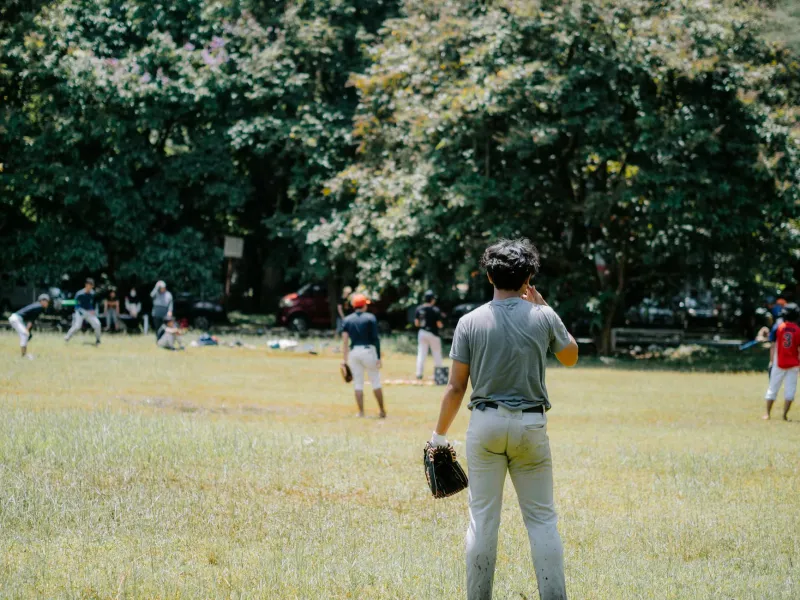
Picture this: It's 1978, and kids are riding their bikes to Miller Park with baseball gloves dangling from the handlebars. Some wear hand-me-down cleats that are two sizes too big. Others play in sneakers. The coach is somebody's dad who volunteered last week, and the biggest decision is whether to stop for ice cream after the game.
Fast-forward to today, and that same park hosts travel teams with matching warm-up gear, personal batting coaches charging $100 an hour, and parents livestreaming games to college scouts. What happened in those four decades didn't just change youth sports — it completely rewrote childhood itself.
When Every Kid Made the Team
In the 1970s and 80s, Little League was genuinely little. Registration cost maybe $25, and that covered the whole season. Equipment was borrowed, shared, or bought secondhand at garage sales. Practice was twice a week, games on Saturday, and the season ended when school started.
Parents showed up when they could, cheered for everyone, and the postgame ritual involved orange slices and juice boxes. The goal wasn't developing the next Derek Jeter — it was keeping kids busy and teaching them to work together.
Most importantly, sports were just one thing kids did. They also rode bikes, played video games, built forts, and got bored. Being good at baseball didn't define anyone's entire identity at age nine.
The Professionalization of Playground Dreams
Somewhere along the way, youth sports became serious business. Really serious. Today's families spend an average of $2,000 per year per child on sports, but elite athletes? Their parents might shell out $20,000 annually.
Travel teams now dominate competitive youth sports, requiring families to drive hundreds of miles for tournaments most weekends. Hotel bills, gas money, and tournament fees add up faster than a major league salary. Some families take out loans to fund their ten-year-old's baseball career.
The equipment arms race is equally staggering. A youth baseball bat that would have cost $30 in 1985 now runs $400. Specialized training facilities have replaced neighborhood pickup games, offering "performance optimization" for elementary school athletes.
The College Recruitment Industrial Complex
Perhaps nothing illustrates the transformation better than the rise of youth sports recruiting. Companies now charge thousands to create highlight reels for middle schoolers and market them to college coaches. Parents hire consultants to navigate the recruitment process before their kids hit high school.
The statistics are sobering: less than 2% of high school athletes receive college scholarships, and most of those are partial. Yet the dream of a full ride drives families to treat their eight-year-old's soccer career like a startup requiring constant investment and strategic planning.
Year-round specialization has become the norm. Kids who once played baseball in spring, football in fall, and basketball in winter now focus on a single sport from age seven onward. The fear of falling behind drives families to choose between normal childhoods and athletic success.
What We Lost in Translation
The old system wasn't perfect. Opportunities were limited, especially for girls and minorities. Equipment quality was inconsistent, and coaching knowledge was hit-or-miss. But something valuable disappeared in the rush toward professionalization.
Spontaneous pickup games vanished when organized activities consumed every free moment. Kids stopped learning to settle their own disputes when referees took over. The simple joy of playing for fun got buried under performance metrics and college prep anxiety.
Families used to bond over sports. Now they stress over them. Parents who once chatted casually on sidelines now study game film and debate training regimens. The community aspect that made youth sports special became secondary to individual achievement.
The Unintended Consequences
Today's hyper-organized youth sports system produces technically superior athletes, but it's also creating unprecedented levels of burnout and anxiety. Sports psychologists report treating children as young as ten for performance-related stress.
Injury rates have skyrocketed as young bodies endure year-round training designed for adults. Tommy John surgery, once reserved for professional pitchers, is now performed on high school students whose arms couldn't handle the constant throwing demanded by travel ball.
Perhaps most troubling, many kids simply quit. Studies show that 70% of children drop out of organized sports by age thirteen, often citing pressure, cost, or loss of fun as primary reasons.
Before the Blink
The transformation happened gradually, then suddenly. One day we were cheering for kids learning to catch fly balls, and the next we were analyzing exit velocity statistics for fifth graders. The infrastructure of youth sports became so sophisticated that we forgot why we built it in the first place.
What started as neighborhood fun became a pathway to college dreams, then morphed into an industry that profits from parental anxiety and childhood ambition. We convinced ourselves that earlier was better, more was better, and expensive was better.
Maybe it's time to remember what we knew in 1978: sometimes the best victories are measured in ice cream cones and tired smiles after a game well played, win or lose.