Your Library Card Was Your Golden Ticket: When Every American Kid Had Equal Access to Everything
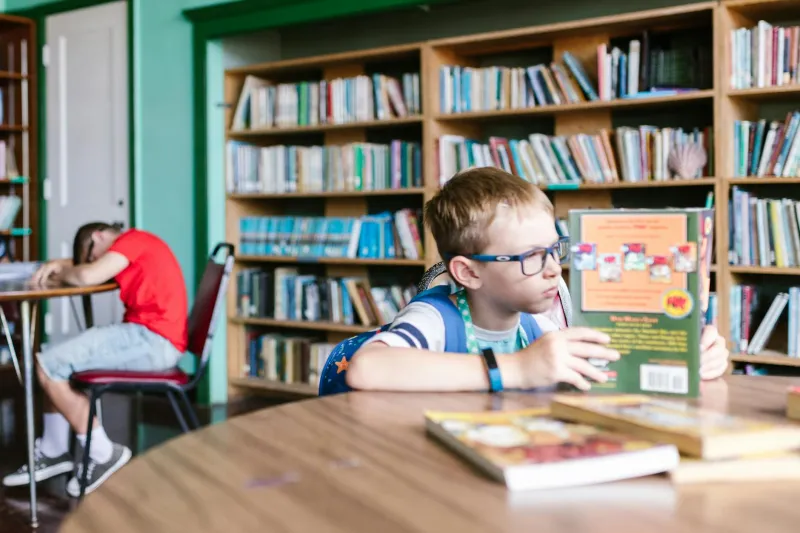
The Democracy of Discovery
Walk into any American public library today and you'll find a quiet shell of what once was the beating heart of community life. But rewind to 1965, and that same building would have been buzzing with activity that made it feel more like Grand Central Station than the hushed study halls we know now.
 Photo: Grand Central Station, via images.hyperinzerce.cz
Back then, your library card wasn't just a borrowing privilege—it was your passport to everything. While today's kids navigate paywalls and subscription services just to read a magazine article, their grandparents walked into any library in America and had free access to the same resources as millionaires. The newest bestsellers, scientific journals, foreign newspapers, reference materials that cost hundreds of dollars—all yours for the asking.
When Librarians Were Human Search Engines
Before algorithms, there were librarians. And they were magnificent.
These weren't just book-stampers hiding behind circulation desks. They were information architects who could navigate the Dewey Decimal System like GPS, recommend the perfect novel for your mood, help with homework that had your parents stumped, and somehow remember that you were working on that Civil War project from three weeks ago.
Mrs. Henderson at the downtown branch didn't just find you books—she curated your intellectual journey. She knew which kids were struggling readers and steered them toward high-interest, low-level books that wouldn't embarrass them. She spotted the future engineers among the seventh-graders and made sure they discovered the right science magazines. When your research hit a dead end, she didn't suggest you "try different keywords." She walked you to three different sections and pulled exactly what you needed.
The Great Equalizer in Action
In 1960s America, income inequality was real, but knowledge inequality wasn't. The banker's kid and the janitor's kid sat at the same reading tables, used the same encyclopedias, and checked out the same books. Libraries didn't just level the playing field—they made sure everyone knew the game was worth playing.
Every summer, libraries ran reading programs that turned books into adventures. Kids earned prizes not for spending money, but for spending time with stories. The shy kid who never spoke up in class could become an expert on dinosaurs or ancient Egypt, armed with the same resources available to anyone willing to walk through those heavy doors.
More Than Books: The Original Community Center
Libraries were America's first co-working spaces, decades before anyone coined the term. Students studied for SATs at long wooden tables. Adults researched vacation destinations in travel guides. Job seekers combed through help-wanted sections from newspapers across the country. Genealogy enthusiasts traced family trees through microfilm records that would cost thousands to access privately today.
Story time wasn't just childcare—it was cultural transmission. Librarians didn't just read books; they performed them, creating shared experiences that turned individual kids into communities of young readers. These weren't scheduled activities competing with soccer practice and violin lessons. They were the main event.
When Research Required Real Work
Today's students complain about finding credible sources online, but their predecessors developed actual research skills by necessity. You couldn't just Google "Civil War causes" and call it done. You learned to cross-reference multiple sources, take real notes by hand, and synthesize information from books, magazines, and newspapers.
Librarians taught you to think like a detective. They showed you how to follow citation trails, how to distinguish between primary and secondary sources, and how to build arguments with evidence. These weren't formal lessons—they happened organically as you worked through real projects with real deadlines.
The Slow Death of a Great Institution
Somewhere between the rise of the internet and the budget cuts of the 2000s, we convinced ourselves that libraries had become obsolete. Why fund buildings full of books when everything was supposedly available online?
What we lost in that calculation was irreplaceable: the human element of discovery, the serendipity of browsing, and the radical democracy of equal access. Today's information landscape is fractured by paywalls, polluted by misinformation, and designed to keep you clicking rather than thinking.
Modern libraries struggle with reduced hours, skeleton staffs, and communities that have forgotten what they once provided. The librarians who remain are often overworked social workers, managing homeless populations and providing internet access to people who can't afford it at home.
What We Gave Away Without Realizing
The transformation happened so gradually that most Americans didn't notice what we lost. We traded the democracy of knowledge for the convenience of search engines. We exchanged human expertise for algorithmic suggestions. We gave up institutions that served everyone equally for platforms that serve us differently based on our ability to pay.
Your local library was never just about books. It was about the radical American idea that access to information shouldn't depend on your family's income, that curiosity deserved to be fed regardless of your zip code, and that learning was a community value worth investing in together.
That library card in your wallet—if you still have one—once represented something profound about American democracy. It said that in a country built on individual achievement, we still believed some things should be shared by all.
Before the blink of an eye, we had institutions that made that promise real.