Dad Came Home Smelling Like the Job: When Children Actually Understood What Their Parents Did All Day
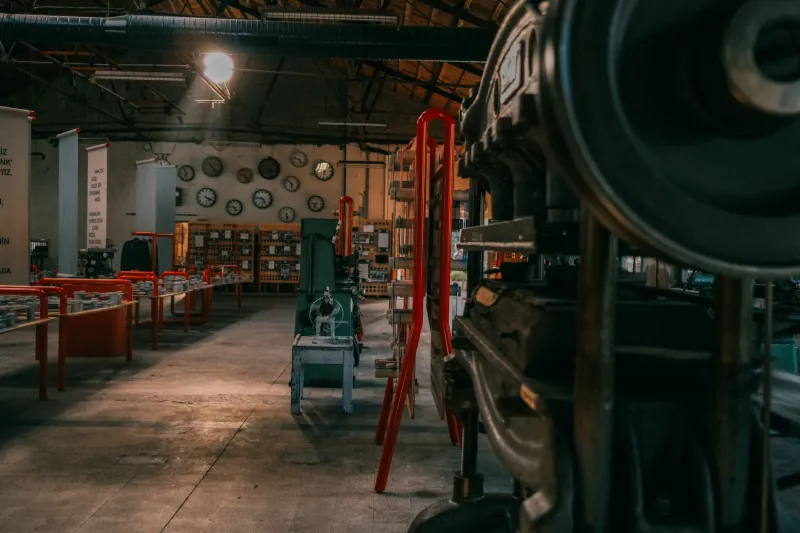
There was evidence on his hands. Grease under the fingernails, sawdust on the collar, the faint chemical smell that clung to the jacket hung by the front door. You didn't have to ask what your father did for a living. The answer walked in with him every evening at five-thirty.
For most of American history, work left a visible mark. And children — without ever being formally taught — absorbed what that work meant.
When the Job Was Something You Could Touch
In the middle decades of the twentieth century, a significant portion of American fathers — and a growing number of mothers — worked in jobs that had a physical, legible presence. Factory workers, mechanics, carpenters, electricians, plumbers, farmers, postal carriers, police officers, nurses, teachers. These were professions a child could observe, imitate, and understand without a business degree.
Field trips to the plant weren't unusual. Bring-your-kid-to-work arrangements were informal but common — you showed up on a Saturday, watched the line move, smelled the oil, heard the noise. You came home knowing something real. The job had weight and dimension.
Even white-collar work had clarity. The insurance salesman had a briefcase full of actual paper forms. The accountant had ledger books spread across a dining room table. The doctor had an office two blocks away where the whole neighborhood went. The work was visible, located, and comprehensible to a ten-year-old.
Kids didn't just understand what their parents did. They understood why it mattered. The factory made the thing. The mechanic fixed the thing. The teacher taught the kids. The chain was short and the logic was obvious.
The Slow Fade Into the Abstract
Somewhere along the way, work became harder to explain at the dinner table.
The economy shifted. Manufacturing moved or automated. Service industries expanded. The financial sector grew enormous and complex. Technology created entire categories of employment that didn't exist a generation ago — and that resist any plain-English summary.
Ask a child today what their parent does, and you'll often get something like: He works on a computer. She's in consulting. He does something with data. She manages accounts. These answers aren't wrong. They're just... empty. They describe the medium, not the meaning.
And it's not the child's fault. It's genuinely difficult to explain what a UX strategist does. Or a compliance analyst. Or a cloud infrastructure architect. Or a brand engagement director. These are real, valuable, often well-compensated professions — but they live inside systems so specialized and abstract that even the people doing them sometimes struggle to summarize their purpose over a holiday dinner.
Remote work made it stranger still. When the office is a laptop on the kitchen counter, the boundary between working and not-working blurs for everyone in the house. Dad is technically present but mentally somewhere else. Mom is on a call but the call is about something no one can follow. The work is happening — you can see the screens — but what's actually being produced is invisible.
What Gets Lost in the Gap
This isn't a small thing. The ability to understand a parent's work shapes how children understand the adult world, value labor, and begin imagining their own futures.
When work was tangible, children absorbed practical knowledge without trying. They learned about effort and craft. They watched problems get solved with hands and tools. They saw what it looked like to be competent at something. They developed an early, intuitive sense of how the economy functioned — who built things, who fixed things, who served whom.
They also developed pride. There's something specific and formative about telling your friends my dad builds houses or my mom's a nurse at County General. The job had an identity attached to it. It meant something in the community.
When work becomes abstract, that transmission breaks down. Children don't develop the same concrete sense of what labor looks like or what it produces. Career ambitions, for many kids, drift toward the visible — athletes, YouTubers, influencers — because those are the jobs they can actually observe and understand. The invisible professions, however lucrative, don't fire the imagination the same way.
There's also an emotional component. Feeling connected to what your parent does — even partially — is a form of closeness. It builds respect and context. It helps a child understand why the parent is tired, why the work matters, why some days are harder than others. When the work is opaque, that understanding disappears with it.
Bring Your Kid to Work Day Can't Fix This
There's a reason the formal observance exists — one designated Thursday in April where children trail their parents into offices and sit in conference rooms watching people type. It's well-intentioned, and sometimes genuinely illuminating. But it's also a scheduled patch on a structural problem.
One day a year can't replace what used to be absorbed over a childhood. The kid who grew up watching their father rebuild engines in the garage on weekends didn't need a field trip. The job was just there, woven into the fabric of everyday life.
Some families have found workarounds. Parents who narrate their work in simple terms at dinner. Who explain, patiently and repeatedly, what the project is actually trying to accomplish. Who bring home artifacts — the presentation, the prototype, the report — and walk their kids through what it means. These are real and meaningful efforts.
But they require intention that previous generations never needed. The work announced itself. Now it has to be translated.
The World Changed Faster Than We Noticed
It's worth pausing on how quickly this shift happened. A child born in 1955 almost certainly grew up with a clear picture of what their parents did. A child born in 1995 probably has only a vague outline. A child born in 2015 may have essentially no idea.
That's two generations. Less than a blink.
The economy didn't just change what adults do for a living. It changed what children see, what they learn without being taught, and what they imagine for themselves. The grease under the fingernails told a story. The open laptop in the kitchen corner tells a much harder one to read.