Three Months and No Plan: What Summer Used to Mean Before Someone Scheduled Every Hour of It
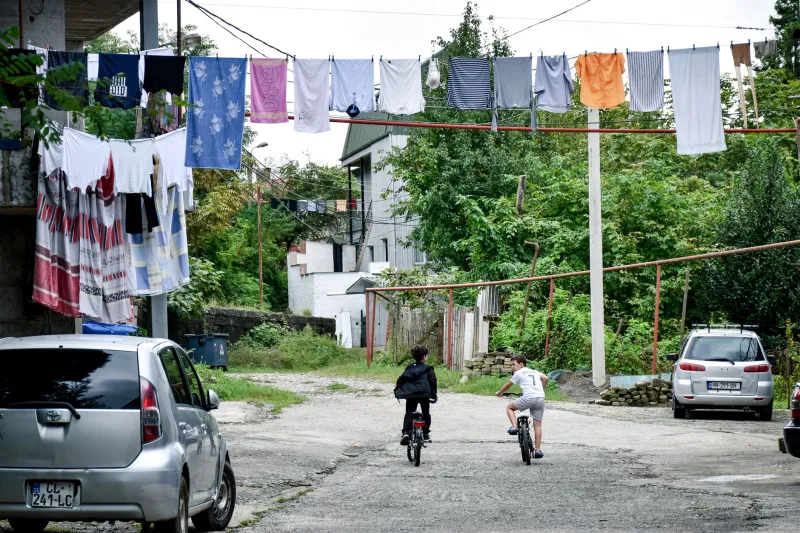
The last day of school in June felt like a door swinging open onto something enormous. Three months. Twelve weeks. No alarm clock, no homework, no particular place to be. The days ahead were a blank calendar, and that blankness was the whole point.
You figured out what to do with it. That was, in a way, the most important assignment of the year.
The Unscheduled Summer
For most of the twentieth century, American summer looked roughly the same across a wide range of households. School ended, children were released, and the season unfolded at its own pace. Kids roamed neighborhoods on bikes. They built things in backyards. They read books nobody assigned. They got bored — genuinely, profoundly bored — and then invented something to do about it.
Adults were largely absent from this process. Parents worked. Grandparents might be nearby, keeping a loose eye on things. But the supervision was minimal by contemporary standards, and intentionally so. Summer was understood to belong to children in a way that the school year didn't. It was their time, and they were expected to fill it themselves.
The activities that emerged from this freedom were unpolished and unstructured. Pickup games in vacant lots. Hours at the public pool. Afternoon movies at the theater downtown. Long bike rides to nowhere in particular. Fort construction. Creek exploration. Porch sitting. Elaborate games with rules invented on the spot and forgotten by the following week.
None of it was optimized. None of it was building toward anything. It was just summer, doing what summer was supposed to do.
When Boredom Was the Feature, Not the Bug
There's a version of this conversation that gets sentimental and soft, and that's worth resisting. Kids weren't universally happy during those long summers. Boredom was real and sometimes miserable. Loneliness happened. Conflicts with siblings went unmediated. The heat was just the heat, and not every family had air conditioning.
But boredom, it turns out, was doing something. Child development researchers have argued for years that unstructured time — including the uncomfortable, restless kind — is where important cognitive and emotional work happens. Kids who are left to their own devices learn to self-direct. They develop internal motivation. They practice creativity without a rubric. They learn to tolerate discomfort and work through it rather than having it immediately resolved by a scheduled activity.
The long summer wasn't a vacation from development. It was a different kind of development — one that happened sideways, accidentally, without any adult planning it that way.
How the Calendar Got Colonized
The shift didn't happen all at once. It crept in gradually, driven by a combination of economic pressure, cultural anxiety, and genuine good intentions.
Dual-income households became the norm, and the three-month childcare gap became a practical problem with no easy solution. Organized camps — day camps, sports camps, specialty camps — filled the need. That was reasonable and necessary, and nobody's arguing otherwise.
But something else was also happening. The academic competition for college admission was intensifying, and parents began to understand that summer wasn't just downtime — it was an opportunity. Language immersion programs. Science camps. Pre-college courses. Volunteer experiences that would look good on applications. The summer resume was born.
Simultaneously, screen time anxieties pushed some families toward more structured alternatives. Better to have the kids at soccer camp than staring at a TV all day. Better to have them doing something than nothing. The logic was understandable. The cumulative effect was a summer that looked increasingly like a third semester, with different branding.
By the 2010s, the unscheduled summer was largely a thing of the past for middle-class American families. The weeks were mapped out from June to August: camp A, then camp B, then the family vacation, then the SAT prep course, then the volunteer week, then back-to-school shopping. The blank calendar had been filled in, and filled in thoroughly.
The Gains Are Real. So Are the Losses.
It would be unfair to pretend nothing good came from any of this. Structured summer programs have genuine value. Kids learn skills at sports camps. They make friends at sleepaway camp. Pre-college programs expose them to subjects they wouldn't encounter otherwise. Supervised summer care is a real necessity for working families who don't have the luxury of flexible arrangements.
The gains are real. They're just not the whole story.
What's harder to measure — and therefore easier to ignore — is what disappears when every hour is accounted for. The experience of not knowing what to do, and then figuring it out. The slow afternoon that turns into something unexpected. The summer friendship that forms because two kids were bored in the same place at the same time. The project that starts as nothing and becomes something, because there was time to let it develop.
These things don't show up on a resume. They don't have measurable outcomes. They're not optimized for anything. And they may be exactly what a child needs in order to become a self-directed adult who can tolerate uncertainty and generate their own motivation.
The Summer That Taught You Who You Were
Ask most Americans over forty about their most formative childhood summers, and the stories they tell are rarely about structured programs. They're about the summer they built a go-kart out of spare parts. The summer they read every book in a particular series because no one told them to stop. The summer they got into a fight with a best friend and had to figure out how to repair it without any adult intervention.
Those summers shaped something. Not because they were planned that way, but because they weren't planned at all.
The world changed, as it tends to do. The economy changed, the competition changed, the anxieties changed. Summer got scheduled because scheduling felt responsible, and in many ways it was. But something quiet and important went with the blank calendar — the particular education that only boredom and freedom and unhurried time can deliver.
We filled in the hours. We just didn't always notice what we were filling them in over.