She Knew Your Brand Before You Asked: The Day the Grocery Store Stopped Knowing Your Name
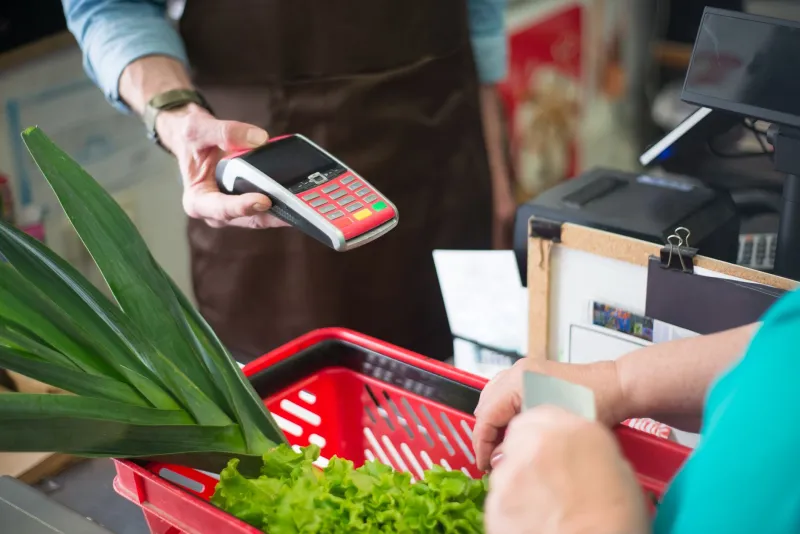
Somewhere between the invention of the barcode scanner and the rise of the self-checkout kiosk, the American grocery store quietly stopped being a place where anybody knew you. It happened gradually enough that most of us didn't notice until we were already standing in front of a touchscreen, arguing with a machine about whether we'd placed our item in the bagging area.
But go back a few decades — back to the corner market, the neighborhood IGA, the family-owned grocery that anchored the block — and you'd find something that looked less like retail and more like a gathering place.
The Checker Who Knew Your Whole Household
In the 1950s and '60s, the checkout lane was staffed by people who treated the job like a long-term relationship. A good cashier knew the regulars by name, remembered that Mrs. Patterson was watching her sodium, and quietly set aside the brand of coffee Mr. Henderson liked when it went on sale. These weren't extraordinary acts of service. They were just what the job looked like when the same people showed up in the same store, week after week, for years.
The cashier role carried a kind of informal authority. They were the last human interaction before you walked out the door, and in smaller towns or tight-knit urban neighborhoods, they were genuinely woven into the social fabric. You caught up with them the way you caught up with a neighbor over a fence. They knew when your wife had been sick, when your son started college, when you'd switched to decaf.
The store itself was designed around this rhythm. Checkout lanes were narrow enough to force a pause. There was no self-service option, no express lane pressure. You waited your turn, you chatted, you exchanged the small currency of a connected life.
When Efficiency Became the Only Goal
The shift didn't happen overnight. Supermarkets grew through the '70s and '80s, trading intimacy for square footage. The neighborhood IGA gave way to the regional chain, which gave way to the national big-box grocery. Each step up in scale meant one step back from the personal.
Barcode scanners arrived in the mid-'70s and changed the pace of everything. Transactions got faster. Lines moved quicker. Cashiers no longer needed to memorize prices or mentally total a cart — the machine did it. That was a genuine improvement in one sense. But it also meant the job became less skilled, less stable, and less likely to attract someone who planned to stay for twenty years and learn every customer's face.
By the 1990s, the superstore model had taken hold across the country. Wal-Mart Supercenters, Kroger megastores, and warehouse clubs like Costco redefined what grocery shopping meant. The store was now a logistics operation. You were a transaction moving through a system.
And then came the kiosk.
The Machine That Finished the Job
Self-checkout debuted in American stores in the early 1990s and spread rapidly through the 2000s. By the 2010s, it was everywhere — four or six or eight machines squeezed into the space where checkout lanes used to be, supervised by a single employee whose job was essentially to troubleshoot the thing you were doing yourself.
The pitch was convenience, and in a narrow sense, it delivered. No waiting for a cashier to become available. No small talk if you weren't in the mood. In and out in under three minutes with a basket of groceries.
But something invisible went with it. The casual human exchange that used to bookend the weekly shop — gone. The person who noticed you'd switched brands and asked if everything was okay — replaced by a prompt to select your payment method. The feeling that the store was, in some small way, yours — replaced by the sensation of being a user in someone else's system.
What the Numbers Don't Capture
Retailers will tell you customers prefer self-checkout. The data says people choose it when it's available. But choice and preference aren't always the same thing. We choose it because it's faster, not necessarily because it's better. There's a difference between tolerating anonymity and welcoming it.
Studies on loneliness in America have consistently found that the loss of casual, low-stakes social interaction — the kind you get from a cashier who recognizes you — contributes meaningfully to isolation. These micro-connections, the brief exchanges that don't mean much individually, add up to something over time. They are the texture of a connected life. And they've been steadily engineered out of the shopping experience in the name of throughput.
Some grocers are pushing back. Trader Joe's built a brand identity partly on the premise that a human being will always check you out. Certain co-ops and regional chains still staff every lane during peak hours. A few independent grocers have made the personal touch a selling point, because it's now rare enough to be worth advertising.
The Price of the Fast Lane
It's worth asking what we actually traded away. We saved maybe four minutes per trip. We eliminated the need to make eye contact with another person. We turned a social ritual into a logistics problem.
The cashier who knew your name wasn't just a service worker. She was a node in the network of community life — someone who connected you, however briefly, to the place you lived. When she retired and the kiosk took her lane, the store didn't just lose an employee. The neighborhood lost a thread.
None of this means progress was wrong, or that we should go back. But it's worth pausing at the self-checkout screen, in the moment before you scan your first item, and noticing what isn't there anymore. The machine is fast. It doesn't know your name. And it never will.