No Reservation, No Problem: The Lost Freedom of the American Roadside Motel
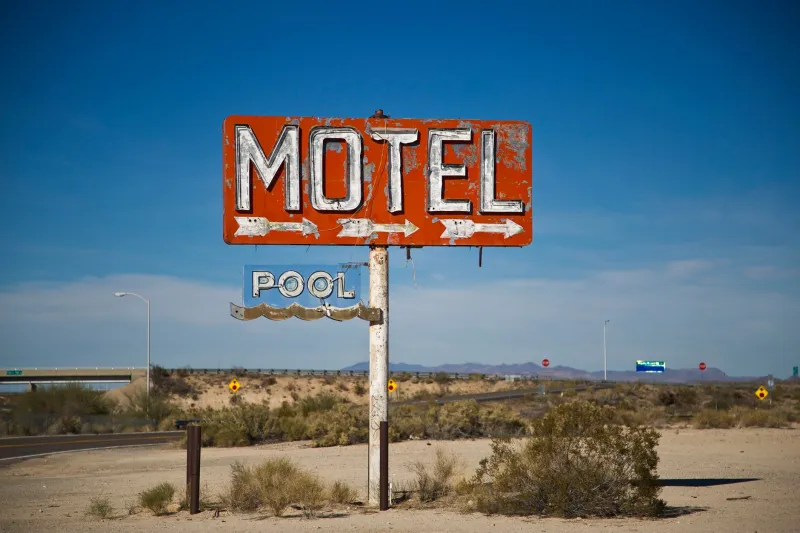
Somewhere around mile 400, your dad would squint at a hand-painted sign — VACANCY, POOL, COLOR TV — and make a call. Not on a phone. Just a gut feeling. He'd pull the station wagon off Route 66 or Highway 1 or whatever two-lane road your family was burning through that summer, crunch across a gravel parking lot, and push open a glass door with a little bell above it.
The owner would look up from behind a laminate counter. There'd be a brief conversation about room type, maybe a negotiation over price, a key on a plastic diamond fob, and that was it. You were checked in. The whole thing took four minutes.
No confirmation number. No digital receipt. No review to read first. Just a handshake and a room number.
The Vacancy Sign Was the Only Algorithm You Needed
From the postwar boom through the 1980s, independent roadside motels were the beating heart of American road travel. They lined the edges of every major highway in the country — family-owned, often family-operated, with the owner's residence connected directly to the office. The man handing you your key might have been the same one who painted the parking lot stripes and fixed the ice machine.
Booking ahead wasn't really a thing most families did. You drove until you were tired, or until the kids got unbearable, or until you spotted a place that looked decent enough. The vacancy sign was your only data point. If it was lit, you stopped. If the lot looked reasonably clean and the price was fair, you stayed.
That was the entire decision-making process. And it worked.
Families developed a kind of informal roadside literacy — learning to read a property at a glance. A well-swept walkway. Curtains that weren't falling off the rod. A pool that was actually blue. These small visual cues told you everything you needed to know, and most of the time they were right.
The Owner Wasn't a Brand. He Was a Person.
What made those motels genuinely different wasn't just the price or the simplicity. It was the human at the center of the transaction.
The owner of the Blue Spruce Motor Inn in Colorado or the Sea Breeze Motel outside Myrtle Beach wasn't managing a portfolio of properties from a corporate office. He was right there, in the same building, often raising his kids in the unit at the end of the row. He knew which rooms got the best morning light. He'd tell you about the diner two miles up the road that did the best pie in the county. He'd warn you about the construction noise on the east side of the property.
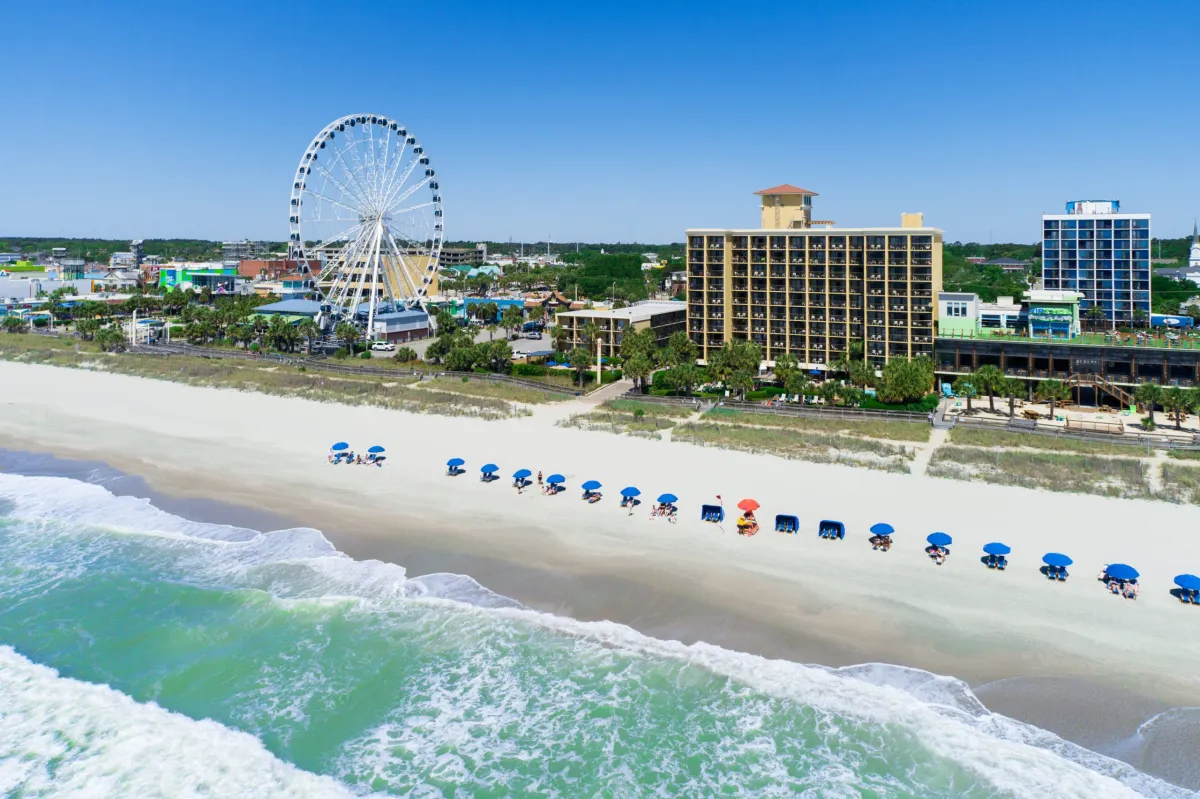 Photo: Myrtle Beach, via www.myrtlebeachholidayinn.com
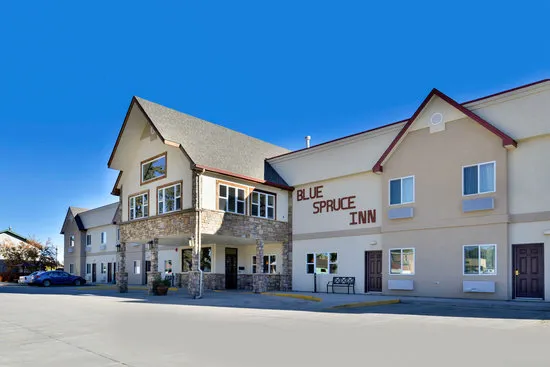 Photo: Blue Spruce Motor Inn, via media-cdn.tripadvisor.com
That exchange — guest and host, face to face, with real local knowledge passing between them — was a kind of travel intelligence no app has ever fully replicated.
And when something went wrong? You knocked on the office door. A real person answered. The problem got solved, or it didn't, but either way you dealt with a human being who had a stake in your experience because their name was on the sign out front.
What Happened When the Internet Showed Up
The shift didn't happen overnight, but it was thorough. Online booking platforms emerged in the late 1990s and by the mid-2000s had fundamentally restructured how Americans planned travel. Suddenly you could compare dozens of properties simultaneously, read reviews from strangers, lock in a rate weeks in advance, and receive a confirmation email with a reference number to screenshot and save.
For a lot of travelers, this felt like progress. And in many ways it was. You could avoid the genuinely bad properties. You could find deals. You could plan a two-week itinerary with every night accounted for.
But something else happened too. Spontaneity got squeezed out of the equation.
Today, pulling off a highway without a reservation can trigger a low-grade panic. What if everything's full? What if the ratings are terrible? What if I'm paying more than I would have if I'd booked three weeks ago? The psychological freedom that came with simply not knowing — and being okay with that — has largely evaporated.
The independent motel owner, meanwhile, largely didn't survive the transition. Unable to compete with the booking platforms' reach and the chain hotels' loyalty programs, thousands of family-run properties either folded or sold out to brands. The Blue Spruce Motor Inn became a Days Inn. The Sea Breeze became a Hampton. The handwritten VACANCY sign became a digital display managed from a server farm in another state.
The Review Economy Changed More Than Just Hotels
There's a broader shift buried inside the story of the roadside motel, and it's worth naming.
When we handed travel decisions over to aggregated ratings and algorithms, we also handed over a certain kind of trust — trust in our own judgment, trust in strangers, trust in the idea that things might not be perfect and that would be fine. The review economy promised to eliminate uncertainty. What it actually did was make us worse at tolerating it.
Families who pulled off the highway in 1974 with no reservation and no information weren't reckless. They were adaptable. They understood that the road offered surprises in both directions, and they were equipped to handle either. That adaptability was a skill, and like most skills, it atrophied when it stopped being necessary.
What the Vacancy Sign Actually Meant
Look, nobody's arguing that the era of the roadside motel was without its failures. Some of those rooms were genuinely grim. Some owners were indifferent at best. The lack of accountability that came with no reviews and no centralized standards meant that bad experiences had no real consequences for the property.
But the freedom was real. The spontaneity was real. The sense that a road trip was an open-ended adventure rather than a pre-optimized itinerary was real.
There's something worth mourning in the disappearance of a world where a lit vacancy sign was all the information you needed — where the transaction was human, the stakes were low, and the ability to just figure it out when you got there was something every American family carried as standard equipment.
Before you blinked, the handshake vacation was the only kind there was.