The Paper That Hit the Porch at Six: When the News Only Came Once a Day
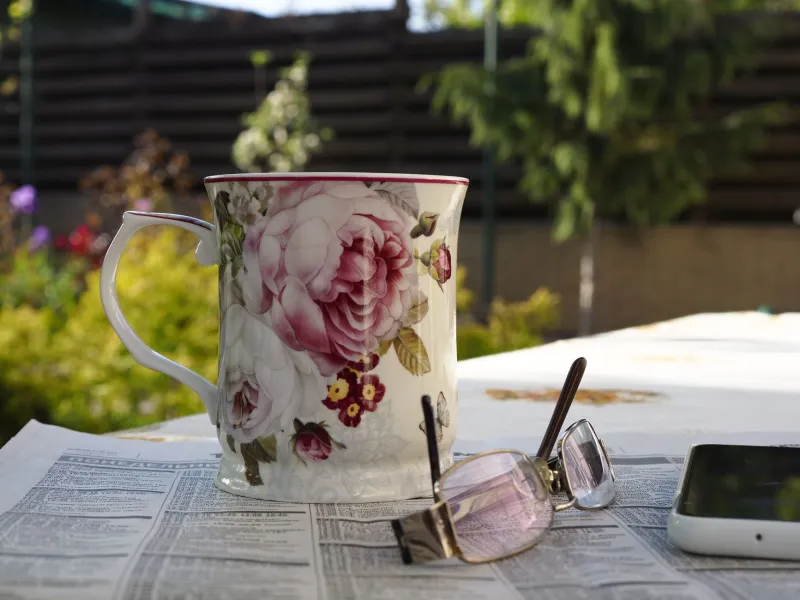
Somewhere between the alarm clock and the first cup of coffee, there used to be a ritual. You'd open the front door — sometimes still in your robe — reach down, and pick up the newspaper. Still slightly damp from the morning air. Folded exactly the same way it always was. The same masthead, the same sections, the same weight in your hand.
That was it. That was the news. Until tomorrow.
It sounds almost quaint now, the idea that information had a schedule. That the world's events would be gathered, edited, printed, delivered, and consumed within a predictable daily window. But for most of the twentieth century, that's exactly how America stayed informed — and the rhythm of it shaped something deeper than just what people knew. It shaped how they thought.
The Morning Belonged to the Paper
In the 1950s, 60s, and 70s, newspaper circulation was staggering by modern standards. At its peak in the late 1980s, American daily papers were selling roughly 63 million copies every single day. Households across the country — from suburban ranch homes in Ohio to walk-up apartments in Brooklyn — started their mornings the same way. Paper first. Everything else second.
There was an order to it. Dad got the front section. Mom might take the lifestyle pages. The kids flipped to comics or sports. The paper moved around the table like a shared resource, each section handed off when you were done, each story available to anyone who wanted it. You were all reading the same thing, curated by the same editors, filtered through the same institutional judgment about what mattered.
That shared experience meant something. When a big story broke — a political scandal, a space launch, a championship win — the whole country read essentially the same version of it the next morning. The national conversation had a common starting point. Water cooler talk had a source everyone agreed on.
The Scarcity Was the Point
Here's the thing nobody talks about: the limitation was actually useful.
When the news only came once a day, you read it and moved on. There was no refreshing, no checking back in an hour to see if anything had changed. A story ran, you absorbed it, and life continued. The anxiety that now comes with the 24-hour news cycle — the constant drip of updates, the breaking alerts that break again twenty minutes later with corrections — simply didn't exist. The paper said what happened. You believed it or you didn't. Then you folded it up and put it in the recycling.
There was also something clarifying about editorial gatekeeping. Journalists and editors decided what made the front page. That system had its flaws — real ones, worth acknowledging — but it also meant that not every rumor, every outrage, every half-baked opinion got equal billing. Space was finite. Choices had to be made. The result was a kind of information diet that, while imperfect, at least had portion control built in.
When the Presses Stopped Running
The decline didn't happen all at once. It crept in. First came cable news in the 1980s, offering updates throughout the day. Then the internet arrived in the 1990s and changed everything faster than anyone anticipated. By the early 2000s, newspaper websites were giving away for free what people used to pay to have tossed onto their driveways. Circulation numbers started sliding. Newsrooms shrank. Papers that had published for over a century quietly folded.
Today, just over 20 million print newspapers are sold daily in the US — less than a third of the peak. Many cities that once had two competing daily papers now have none. The local beat reporter who knew every city council member by name? Often gone. The foreign correspondent stationed abroad for years? A luxury most outlets can no longer afford.
What replaced all of that wasn't nothing — it was everything. An infinite, constantly updating stream of news, opinion, rumor, and noise available every hour of every day on every device you own. Push notifications that interrupt dinner. Algorithms that decide what you see based on what kept you clicking before. Headlines written not to inform but to provoke just enough to earn a tap.
What We Traded Without Realizing It
The access we have now is genuinely remarkable. A person in rural Kansas can read reporting from Tokyo in real time. Events that once took days to reach public awareness now trend within minutes. In a genuine crisis, that speed saves lives.
But something got traded in the bargain, and most of us didn't notice until it was already gone.
The newspaper gave you a finished product. Someone else had already done the sorting, the verifying, the prioritizing. You could read it completely, set it down, and feel informed. That sense of completion — of being done with the news — is nearly impossible to replicate today. There's always another update. Always one more thing to check. The news cycle doesn't close anymore. It just keeps spinning.
And that shared starting point — that common text the whole country read together — has splintered into a thousand different feeds, each one personalized, each one subtly different, each one quietly confirming what the reader already believed.
The Thud on the Porch
If you're old enough to remember it, you probably remember it fondly in ways you can't quite explain. The specific sound the paper made landing on concrete. The smell of the ink. The way the crossword puzzle felt like a fair fight you could actually finish.
If you're too young to have known it, it might sound like a limitation. One source. One delivery. Once a day. Why would anyone want less?
But maybe that's the point. It wasn't less information. It was more intention. You sat down with the news. You read it. And then you went and lived your day.
Before you blinked, that was just called Tuesday morning.