Built to Outlast You: The Quiet Death of the Appliance That Never Quit
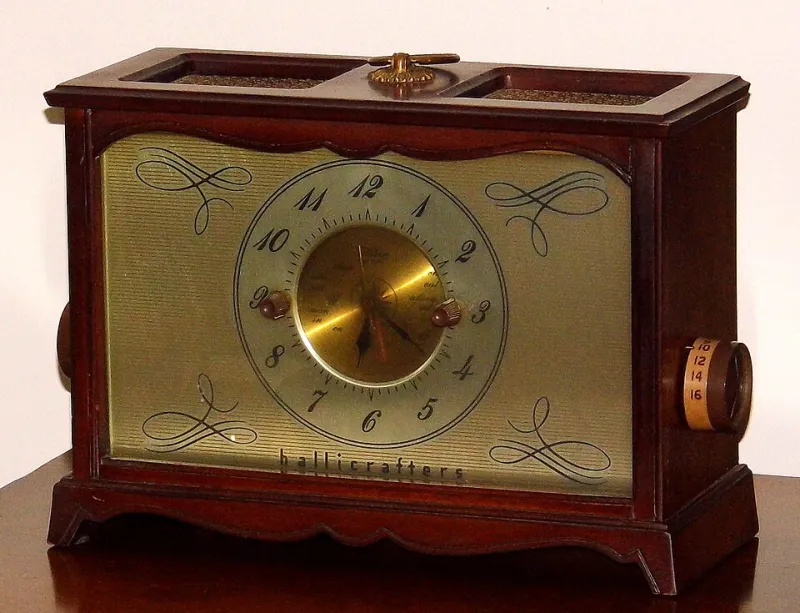
Photo: Joe Haupt from USA, CC BY-SA 2.0, via Wikimedia Commons
There's a good chance your grandmother had a washing machine that outlived two presidents, one kitchen renovation, and at least three family dogs. It sat in the basement, hummed like a diesel engine, and never once asked to be replaced. Nobody thought that was remarkable. It was just how things worked.
Somewhere between then and now, that expectation quietly disappeared — and most of us didn't notice until we were standing in an appliance showroom, staring at a refrigerator that costs $2,400 and comes with a two-year warranty that feels like a dare.
When They Built Things Like They Meant It
In the postwar decades — roughly the 1940s through the late 1970s — American appliance manufacturers were competing on a very specific promise: durability. A Maytag washer or a GE range wasn't just a product. It was a statement that a family had arrived at a certain kind of stability. You bought it once. You kept it. You handed it down.
The engineering behind those machines reflected that promise. Heavy-gauge steel. Mechanical timers with simple, replaceable parts. Motors wound so tightly they barely had to work. A repairman — and there was always a repairman, usually the same one, usually someone your neighbor had recommended — could diagnose most problems in twenty minutes and fix them with parts he carried in a metal box in the back of his truck.
The average lifespan of a major appliance in the 1960s hovered around 20 to 25 years for refrigerators, and washing machines often hit the same mark. Some went longer. Much longer. There are documented cases of Maytag wringer washers from the 1950s still running in the 2000s — not as novelties, but as working household appliances.
The Maytag repairman wasn't just an advertising gimmick. He was a cultural figure precisely because the joke was that he had nothing to do. That was the whole point.
The Shift Nobody Announced
At some point — and it happened gradually enough that no single moment stands out — the manufacturing calculus changed. The question stopped being how long will this last? and started being how long before they need to buy another one?
Planned obsolescence isn't a conspiracy theory. It's a documented business strategy with a name and a history. General Motors design chief Alfred Sloan was talking about it in the 1920s. By the 1980s and 1990s, as global manufacturing competition intensified and retail price pressure mounted, appliance makers found that building something to last twenty years was simply less profitable than building something to last seven.
The numbers tell the story plainly. According to industry data, the average lifespan of a washing machine today is roughly 10 to 13 years — about half what it was fifty years ago. Refrigerators that once ran for two decades now average around 13 years. Dishwashers, which barely existed as household items in the 1950s, are considered aging out at nine or ten years.
And repairs? Modern appliances are increasingly difficult — and expensive — to fix. Circuit boards, proprietary parts, and sealed components mean that a single malfunction can cost more to repair than the machine is worth. The math pushes you toward replacement almost every time.
The Repairman Who Knew Your First Name
What got lost alongside the durable appliance was something harder to quantify: the repairman himself.
In the 1950s and 60s, appliance repair was a legitimate trade — respected, well-compensated, and deeply local. These weren't technicians dispatched from a regional call center. They were neighborhood fixtures. They knew which houses had hard water, which dryers needed their lint traps cleaned monthly, which families always waited too long to call. They came to your back door, fixed what was broken, and charged you something reasonable.
That ecosystem — built on repairability — couldn't survive the throwaway model. As manufacturers moved away from serviceable designs, the economics of repair work collapsed. Why spend three years learning to fix machines that the manufacturer has essentially decided aren't worth fixing?
Today, the appliance repair industry is a fraction of what it was. Independent repair shops have mostly vanished. The ones that remain often struggle to source parts for machines that are only a few years old. Manufacturers have increasingly restricted access to repair manuals and components — a practice that has sparked a growing "right to repair" movement across the country, with several states now passing or considering legislation to address it.
The True Cost of Cheap
Here's the irony that doesn't get talked about enough: the cheaper appliances of today often cost more in the long run.
A washing machine in 1965, adjusted for inflation, cost somewhere in the range of $1,200 to $1,500 in today's dollars. It ran for twenty-five years. Today's entry-level washer might cost $600 — but if it lasts ten years and requires two service calls along the way, the math starts to close. And the environmental cost, the one nobody puts on the price tag, is enormous. Millions of tons of appliance waste enter landfills every year. Steel, copper, plastic, refrigerants — all of it buried because fixing it wasn't worth the trouble.
Your grandmother didn't think about sustainability. She just expected her washing machine to work. Turns out those two things weren't so different after all.
What We Actually Gave Up
There's something almost philosophical about the shift. The durable appliance era was built on an implicit contract between maker and buyer: we stand behind this thing. That contract didn't require fine print. It was expressed in the weight of the machine, the thickness of the steel, the confidence with which the repairman showed up and got to work.
When that contract dissolved, it wasn't just the appliances that changed. It was the relationship between consumer and product — and maybe between citizen and institution, in some broader way. The expectation that something should last, that someone should stand behind it, that quality was worth paying for — all of that softened.
Before the blink, your refrigerator was an heirloom. Now it's a subscription you haven't signed yet.
The repairman is mostly gone. The machine that never quit is mostly gone too. And the quiet confidence that came with owning something built to outlast you — that might be the thing we miss most of all, even if we can't quite name it.