The Empty Lot That Taught You Everything: How Pickup Sports Raised a Generation Nobody Scheduled

Photo: Gunnery Sgt. Mark Oliva, Public domain, via Wikimedia Commons
Somebody always had a ball. That was the only requirement. Everything else — the teams, the rules, the arguments, the resolutions — got invented on the spot by a rotating group of kids who ranged in age from seven to fifteen and had exactly zero adult supervision.
The empty lot, the cul-de-sac, the strip of asphalt behind the school — these were America's most democratic classrooms. And they've been closed for a while now.
The Field That Didn't Need a Name
For most of the twentieth century, the rhythm of a summer afternoon in almost any American neighborhood followed a recognizable pattern. Kids finished lunch, disappeared out the front door, and reconvened somewhere — a vacant lot, a dead-end street, a stretch of grass behind someone's house — for hours of completely unstructured sport.
Sandlot baseball. Street football with telephone poles as end zones. Driveway basketball with a hoop bolted to a garage that leaned six degrees to the left. These games didn't have uniforms. They didn't have referees. They didn't have parents watching from folding chairs, and they definitely didn't have a photographer capturing every moment for social media.
What they had was something more valuable: genuine self-governance.
The kids picked teams — usually through some variation of the classic bat-grip method or a round of rock-paper-scissors. They negotiated rules on the fly. Do-overs count if the car drove through the outfield. You're out if it hits you below the knee. First to eleven wins, but you gotta win by two. These weren't written down anywhere. They were argued, agreed upon, and sometimes renegotiated mid-game when someone felt the arrangement was unfair.
The Curriculum Nobody Noticed
Here's what was actually being taught in those empty lots, and why it mattered so much.
Conflict resolution. When the bigger kid called himself safe on a play that was clearly out, somebody had to say something. And then somebody had to back down, or a compromise had to be reached, or the game fell apart. Those negotiations — conducted without a referee, without an app, without a parent stepping in to smooth things over — were practice for every difficult conversation those kids would have for the rest of their lives.
Inclusion by necessity. The teams needed bodies. If the little kid from down the street showed up and you needed an even number, he played. You adjusted. You put him in right field where the action was lightest. You figured it out, because the alternative was playing with uneven teams, and nobody wanted that. This wasn't a lesson in empathy that anyone designed. It was just practical.
Failure without a safety net. You struck out with the bases loaded and the game on the line. Nobody was there to tell you it was okay, that everyone was a winner, that the important thing was having fun. The game continued. You sat down. You got up the next inning and tried again. That particular experience — failing in front of your peers and recovering without adult intervention — turns out to be irreplaceable.
Resilient leadership. Every pickup game produced its own informal hierarchy. The kid who organized the teams, kept track of the score, and de-escalated arguments when they got too heated wasn't elected or appointed. He earned it through demonstrated competence and fairness. Sometimes she earned it. The position was revoked just as quickly if the leadership went sideways. It was the most authentic management training program in American history, and it was completely free.
When the Adults Arrived and the Magic Left
Organized youth sports aren't new. Little League was founded in 1939. But for decades, it existed alongside the pickup game culture rather than replacing it. Kids played organized ball on weekends and pickup ball the rest of the time.
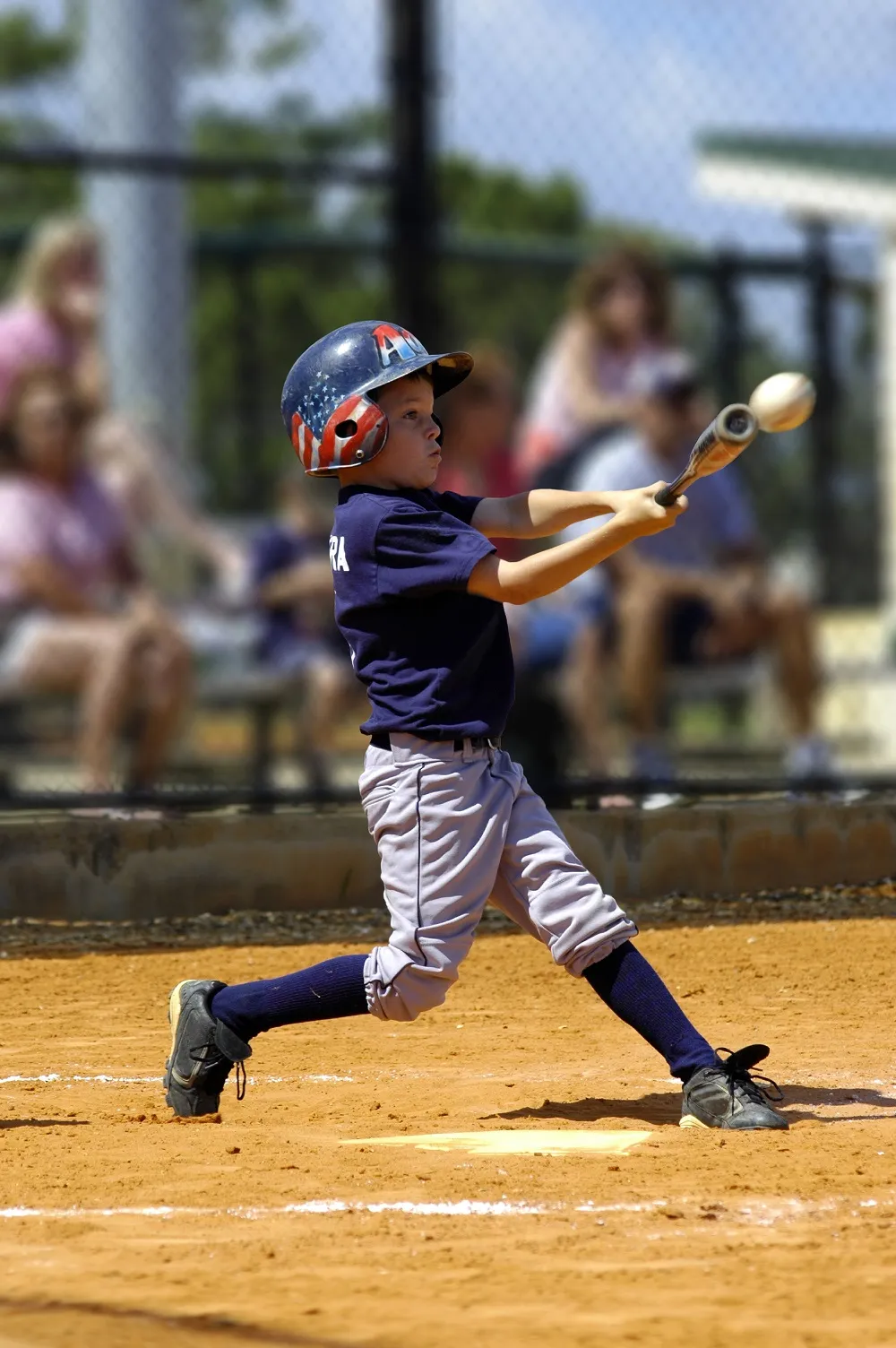 Photo: Little League, via images.squarespace-cdn.com
Somewhere in the 1980s and 90s, the balance shifted. Stranger danger fears — amplified dramatically by media coverage of high-profile child abductions — began to reshape how American parents thought about unsupervised children. The idea of kids roaming the neighborhood until dinnertime started to feel irresponsible rather than normal. Streets that had been alive with pickup games grew quiet.
Organized leagues expanded to fill the vacuum. Today, youth sports in America is a $19 billion industry. Families spend an average of nearly $700 per child per year on organized athletics — and in competitive travel sports, that figure can reach $10,000 or more. There are coaches, uniforms, referees, trophy ceremonies, and, increasingly, private trainers for children who haven't yet hit puberty.
All of that structure comes with a cost that doesn't appear on any invoice.
The coached, scheduled, photographed athletic experience is genuinely valuable in some ways. Kids learn from good coaches. They develop discipline through structured practice. But it teaches a fundamentally different set of skills than the pickup game did. In organized sports, the adult is always present to mediate disputes, enforce rules, and smooth over conflict. The child never has to figure it out — because figuring it out is the adult's job.
The Kid Who Showed Up
There was a particular type of courage required to show up at the empty lot when you weren't sure you'd be picked, or when you knew you weren't the best player, or when the older kids were already deep into a game and you had to insert yourself into the rotation.
That courage — low-stakes, neighborhood-scale, utterly ordinary — was practiced thousands of times by millions of American kids across multiple generations. It built something. A tolerance for uncertainty. A comfort with improvisation. A belief that you could walk into an unstructured situation and find your place in it.
The kids who grew up on those lots didn't know they were learning anything. That was precisely the point.
The lot is mostly empty now, in a different way. The kids are at practice. Everything is scheduled. Someone is keeping score in an app.
Before the blink, the game started when enough kids showed up. That was the whole system. And somehow, it worked better than anyone realized.