Four Dollars of Regular and a Familiar Face: What We Gave Up When We Started Pumping Our Own Gas
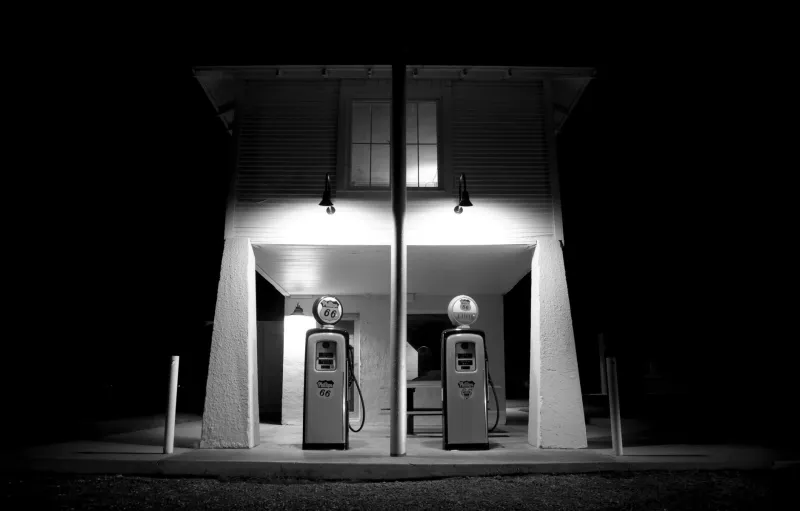
You pulled in. You didn't have to do anything else. The attendant was already walking toward you before you'd rolled to a complete stop, wiping his hands on a rag that had seen better days, already asking what you needed. "Fill it up?" Two words. And then he was moving — unscrewing the gas cap, pulling the nozzle, lifting the hood without being asked, because that was just what you did.
You sat in the car. Maybe you talked to him through the window. Maybe you just watched in the side mirror while he checked the oil, topped off the washer fluid, and ran a squeegee across the windshield with the particular efficiency of someone who'd done it ten thousand times. By the time you handed him the money, your car was better than when you arrived. And you'd had a conversation with another human being.
This was just Tuesday in 1965. It was Tuesday in 1975, too. And by the time it ended, most people didn't notice it was ending.
The Station Was a Neighborhood Institution
The full-service gas station occupied a specific and important role in American community life that has no real modern equivalent. It sat at a corner you passed regularly. The same people worked there for years, sometimes decades. The owner might have been the mechanic, the cashier, and the guy who knew your name — all the same person, or maybe two brothers who traded shifts.
In smaller towns especially, the gas station was a social checkpoint in the most literal sense. It was a place where routes crossed, where you ran into people you knew, where information traveled. Who was hiring, who was sick, which road had a pothole the size of a birdbath — the gas station attendant often knew before anyone else because he talked to everyone who came through. Multiple times a day, every day.
Regulars developed actual relationships with the people who served them. Not deep friendships necessarily, but the kind of reliable, low-stakes human connection that makes a neighborhood feel like a neighborhood. He knew your car. He might know your wife drove it on Thursdays. He'd tell you when something sounded different, when a tire was looking low, when you were maybe a week away from a problem you hadn't noticed yet.
That wasn't customer service in the modern corporate sense. It was just a person paying attention.
The Ritual Had Real Value
Full service wasn't just convenient — though it absolutely was convenient. It built a small but meaningful ritual into a routine activity. Filling up the car was something that happened regularly, predictably, and it happened in a context that included human interaction, a brief inspection of your vehicle, and a transaction conducted face to face.
The attendant's check of your oil and tires wasn't just a courtesy. For a lot of drivers, especially older ones or those who weren't mechanically inclined, it was a genuine safety net. Someone with trained eyes was looking at your vehicle on a regular basis. Problems got caught early. Tires got inflated before they went flat. Coolant got topped off before engines overheated on the highway.
And the windshield — that squeegee on the windshield was such a small thing, but there was something almost meditative about it. Your view of the road, cleaned and cleared before you continued your journey. It was care made visible in about thirty seconds of someone else's effort.
Oregon, New Jersey, and the Holdouts
Oregon didn't allow self-service gas stations until 2018. New Jersey still doesn't — it remains the last state in the country where an attendant pumps your gas by law. Drive through New Jersey today and you'll still pull up to a pump and wait for someone to come to your window, and if you've never experienced it before, it feels slightly surreal, like stumbling into a time pocket where one small thing never changed.
New Jersey residents are famously attached to the practice. When Oregon loosened its restrictions, the backlash from longtime residents was immediate and surprisingly passionate. People weren't just defending convenience. They were defending something they couldn't quite articulate — a sense that this particular interaction was worth preserving even when the economic logic had long since moved on.
They weren't wrong to feel that way. They just couldn't explain exactly why.
What Self-Service Really Means
The transition to self-service pumps happened gradually through the 1970s and accelerated sharply as gas prices spiked and station owners looked for ways to cut labor costs. By the 1980s, self-service was the default across most of the country. By the 1990s, pay-at-the-pump technology meant you didn't even have to go inside. By the 2010s, you could tap your phone and be back in your car in two minutes without making eye contact with another living person.
Efficient? Absolutely. Faster? Often. A net improvement in the pure logistical sense? Probably.
But the gas station stopped being a place. It became a stop. You don't linger. You don't talk. The convenience store attached to the modern station is designed for speed — grab something cold, swipe your card, go. The architecture discourages anything resembling a conversation. There's no one there to have one with anyway.
The attendant who knew your name, who noticed the slow leak, who told you the highway was backed up because he'd heard it from the last six people through — he's been replaced by a touchscreen that asks if you want a car wash.
And the answer is almost always no, because you're already thinking about where you're going next, and there's nobody there to give you a reason to slow down.