The Buick That Never Moved: How Your Neighbor's Driveway Used to Tell You Everything
The Buick That Never Moved: How Your Neighbor's Driveway Used to Tell You Everything
There was a tan Buick LeSabre on Elm Street — or Oak Street, or whatever the street was in whatever town you grew up in — that sat in the same spot for so long it left a permanent impression in the concrete. The neighbors knew whose it was without looking. They knew the owner's schedule, his habits, the particular way he backed out slowly on weekday mornings. They knew when he was traveling because the car stayed put. They knew when something was wrong because it stayed put too long.
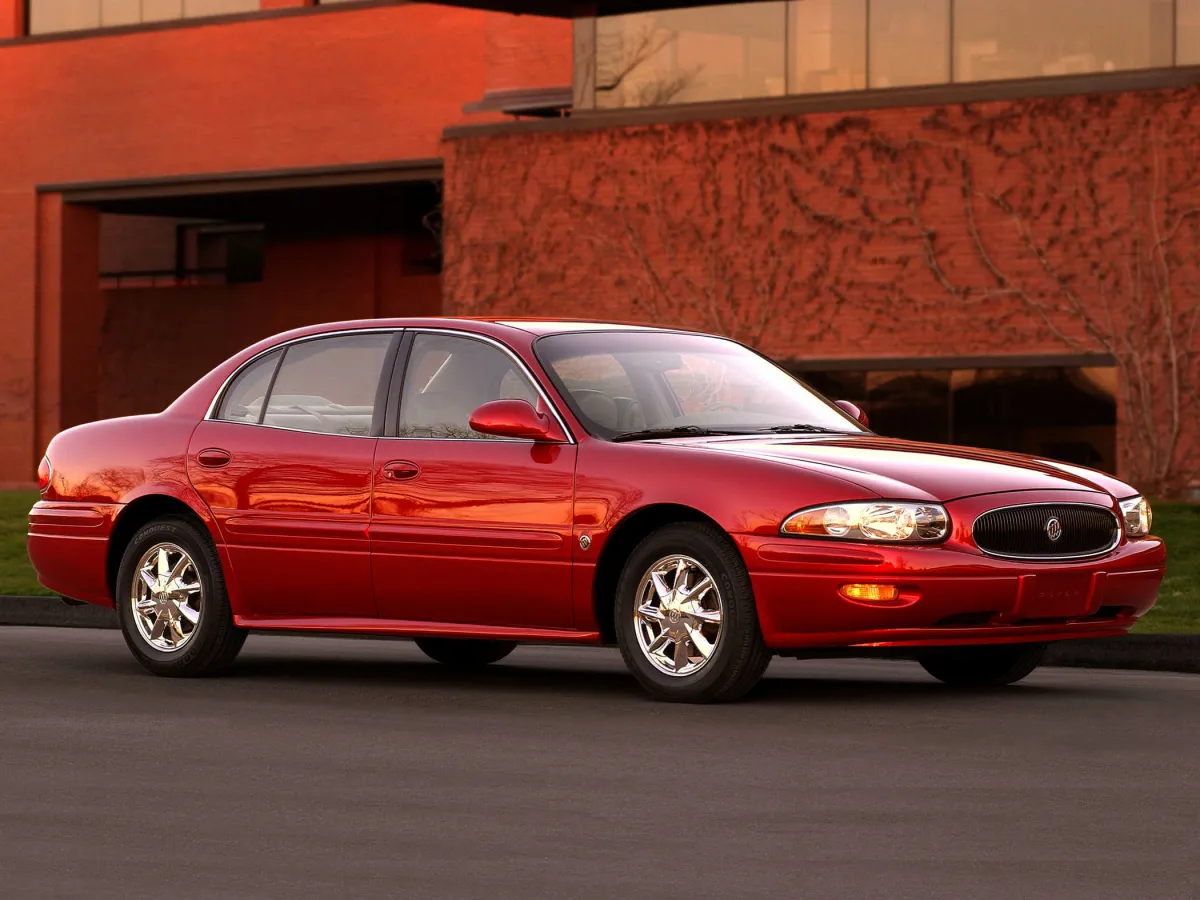 Photo: Buick LeSabre, via platform.cstatic-images.com
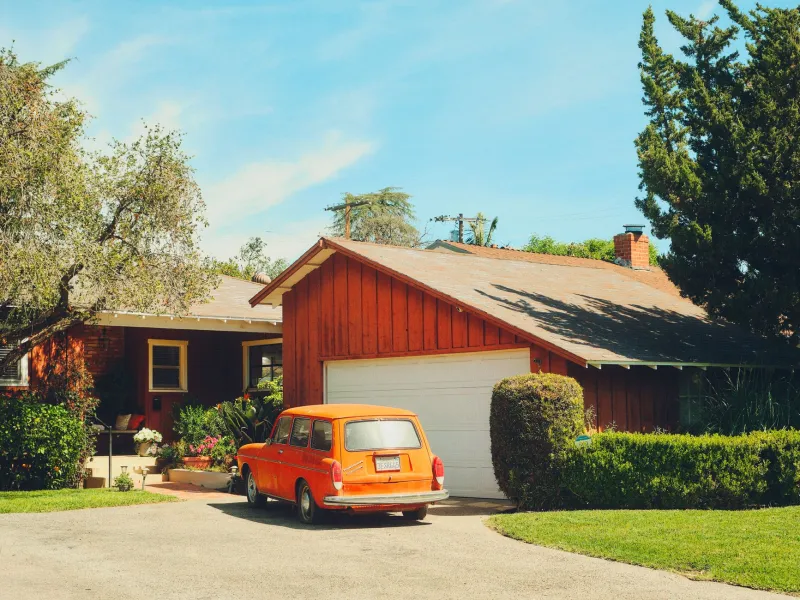
 Photo: Elm Street, via static1.cbrimages.com
That Buick wasn't just a car. It was a data point in a neighborhood's shared understanding of itself.
When Driveways Were Diaries
In the decades following World War II, as American families settled into the suburbs and planted themselves with the intention of staying, the residential street became a kind of living document. The cars parked along it were its sentences.
You could read a block the way you read a room. The contractor's work truck that left before dawn and returned after dark. The teacher's sensible sedan that disappeared in September and returned in June in exactly the same condition. The family with four kids and the minivan that listed slightly to one side from the weight of carpools. The retired couple whose Cadillac was washed every Saturday morning without exception.
These weren't strangers' cars. They were familiar presences. You registered them the way you registered faces, and their absence or alteration carried meaning. A new car in an old driveway was neighborhood news. A driveway that stayed empty too long prompted someone to knock on a door.
Permanence made this possible. People stayed. The median American moved far less frequently than they do today. A family that bought a house in 1958 might still be there in 1978, their cars changing slowly enough that the neighborhood absorbed each transition. The Chevy became a Ford became a Buick, but the driveway stayed the same, and the people in it stayed the same, and that continuity was the foundation of everything.
The Lease Cycle and the Vanishing Neighbor
Drive down a residential street today and try to read it the same way. What you'll find is harder to parse.
The driveways are full of crossovers — largely interchangeable in shape and color, many of them leased on two- or three-year cycles that ensure they'll be replaced before anyone has time to recognize them. The rideshare pickup that idles in front of a house for ninety seconds and then disappears. The delivery van that stops, drops, and moves on. The short-term rental next door whose driveway belongs to someone new every weekend.
None of this is anyone's fault. The economics of modern housing push people toward mobility. Renting is often the only realistic option in expensive markets. Remote work untethered workers from specific cities. Lease deals made new cars perpetually accessible. The forces pulling people away from long-term rootedness are real and structural.
But the result is that the residential street has become harder to read. The cars don't tell you much anymore, because the people behind them aren't planning to stay long enough to be known by their vehicles.
What You Learned Without Trying
The neighborhood driveway as social text taught things that were never explicitly taught. You learned to notice. You learned that other people's routines mattered, that their presence or absence was worth registering. You learned a form of low-level, ambient community surveillance that wasn't intrusive — it was caring.
When Mrs. Patterson's Oldsmobile didn't move for three days, someone checked on her. Not because there was a neighborhood watch program or a community app. Because people noticed the car, and noticing the car meant noticing her, and noticing her meant she wasn't invisible.
That's what familiarity does. It makes people legible to each other. It creates the conditions under which someone is seen.
The transient street — the one where nobody knows whose car is whose, where faces change with the lease cycles — doesn't generate that kind of attention. Not because the people are worse, but because there hasn't been enough time to build the pattern that makes deviation noticeable.
The Teenager's Datsun
There's a specific kind of neighborhood memory that involves a kid's first car. Every street had one. The beater that appeared in a driveway one summer, usually something Japanese and slightly rusted, that announced a teenager had crossed into a new phase of life.
The neighborhood knew what that car meant. They'd watched the kid grow up. They'd seen him on a bicycle, then on foot, then behind the wheel of something barely legal. The car was a chapter in a story they'd been following for years.
That continuity — the ability to watch someone grow up across the span of a car or two — requires people to stay in one place long enough for the story to develop. It requires driveways that belong to the same people long enough to mean something.
The Street That Forgot Itself
American neighborhoods haven't stopped being places where people live. But many of them have stopped being places where people know they live — in the deepest sense of that word, where knowing means being embedded, recognized, and seen.
The cars in the driveway used to be one small part of that embeddedness. They were how you knew your neighbors without always having to talk to them. They were shorthand for presence, for permanence, for the quiet fact that these people were here and planned to keep being here.
Now the driveways turn over. The crossovers cycle through. The rideshare arrives and departs before you can register a face.
Somewhere out there, in a neighborhood that's lucky enough to still have them, there's probably a tan Buick sitting in the same spot it's occupied for fifteen years. The neighbors know whose it is. They notice when it moves. They'd notice if it stopped.
That noticing — small, unremarkable, essential — is what a neighborhood actually is.