He Said Tuesday. He Showed Up Tuesday. When a Contractor's Word Was His Whole Business.
He Said Tuesday. He Showed Up Tuesday. When a Contractor's Word Was His Whole Business.
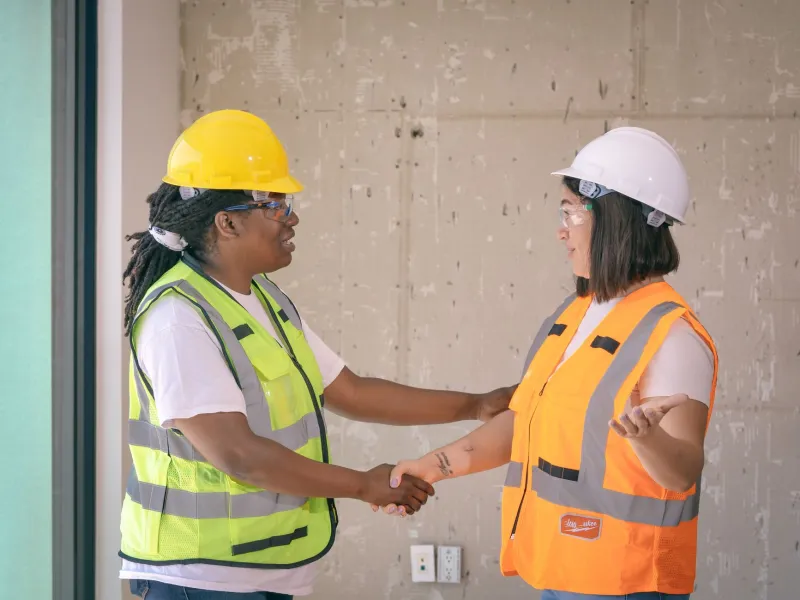
The pickup truck would pull up right on time. Not within a window. Not "sometime in the afternoon." On time. The guy who got out wore a shirt with his name stitched on the pocket, shook your hand, looked at the problem, and gave you a number. You either agreed or you didn't. If you agreed, the work got done, and the bill matched what he said it would.
That's not nostalgia. That's just how contracting worked for most of the twentieth century in most American towns. And somewhere along the way, it stopped.
The Man Who Couldn't Afford to Be Wrong
Local contractors in the postwar decades operated inside a closed loop of accountability that no app has ever managed to replicate. Your plumber lived in your zip code. Your electrician's kids went to school with your kids. The roofer who gave you a quote on Friday would see you at the hardware store on Saturday, and again at the diner on Sunday morning.
In that world, a broken promise wasn't just bad business. It was social catastrophe. Word traveled fast in neighborhoods where people actually knew each other. A contractor who padded a bill or disappeared mid-job didn't just lose one customer — he lost the ten customers that customer would have sent his way. His livelihood was directly tied to his integrity, which meant his integrity was exceptionally reliable.
Prices were straightforward because they had to be. Materials cost what they cost. Labor was what it was. The markup was modest because the competition was local and the customers were neighbors. A man who tried to get clever with his invoices found himself with a lot of free time on his hands.
What Tuesday Feels Like Now
Ask anyone who's tried to get a contractor in the last decade, and you'll hear a version of the same story. You call around. You leave messages. A few people call back, eventually. Someone comes to look at the job, takes some measurements, says they'll send an estimate. The estimate arrives three weeks later, if it arrives at all. You accept it. You wait. The start date moves. Then it moves again.
When the crew finally shows up — and it might be a different crew than the one you met — the project takes longer than quoted, costs more than quoted, and finishes in a way that requires a follow-up call that may or may not get returned. The final bill has line items you don't recognize for materials you didn't authorize.
This is not a horror story. This is Tuesday.
The pandemic accelerated what was already a slow deterioration. Supply chain chaos, labor shortages, and a construction boom created conditions where contractors held all the leverage. Waitlists stretched to six months. Prices ballooned. Accountability evaporated because demand so thoroughly outstripped supply that reputation simply didn't matter the way it once did. A contractor who burned a bridge in your neighborhood had ten other bridges waiting.
When Scale Broke the System
Part of what changed is structural. The small, owner-operated contracting business that defined mid-century American neighborhoods gave way to larger operations, subcontracting networks, and regional franchises. When the person answering your call is different from the person who gives the estimate, who is different from the person who does the work, who is different from the person who sends the invoice — accountability dissolves at every handoff.
The guy with his name stitched on his shirt was accountable because it was his name. When that name becomes a brand, and the brand hires subcontractors, and those subcontractors hire day labor, the human thread connecting promise to performance gets stretched until it snaps.
Online review platforms were supposed to fix this. In theory, Yelp and Google Reviews recreate the old neighborhood feedback loop at digital scale. In practice, reviews are gamed, businesses cycle through names, and a three-star rating doesn't tell you whether someone will show up on the day they promised.
The Price of Not Knowing Your Contractor's Kids
There's something worth sitting with here. The reliability of the old contractor wasn't just a business model — it was a byproduct of community density. People who live near each other, who see each other regularly, who are embedded in the same social fabric, behave differently toward one another than strangers do.
When neighborhoods became more transient, when people moved more often and knew their neighbors less, the informal accountability system that once governed local commerce quietly collapsed. You can't shame someone at the hardware store if you don't know what they look like. You can't warn your neighbor about a bad contractor if you don't know your neighbor.
The contractor problem, in other words, isn't really a contractor problem. It's a community problem that shows up most painfully when your roof is leaking and you're on hold.
What We're Left With
The best contractors today still operate the old way. They're just harder to find, and usually booked solid for months because everyone who finds them holds on tight. They're the ones who still get work through word of mouth, still call you back the same day, still show up when they said they would.
They exist. They're just no longer the default.
The rest of us navigate a landscape of ghost estimates and moving goalposts, trying to manage expectations that were once managed by something far simpler: a handshake in a neighborhood where everyone knew your name, and everyone knew what it meant to break your word.