The Wooden Cabinet That Taught You How to Think: Remembering the Card Catalog
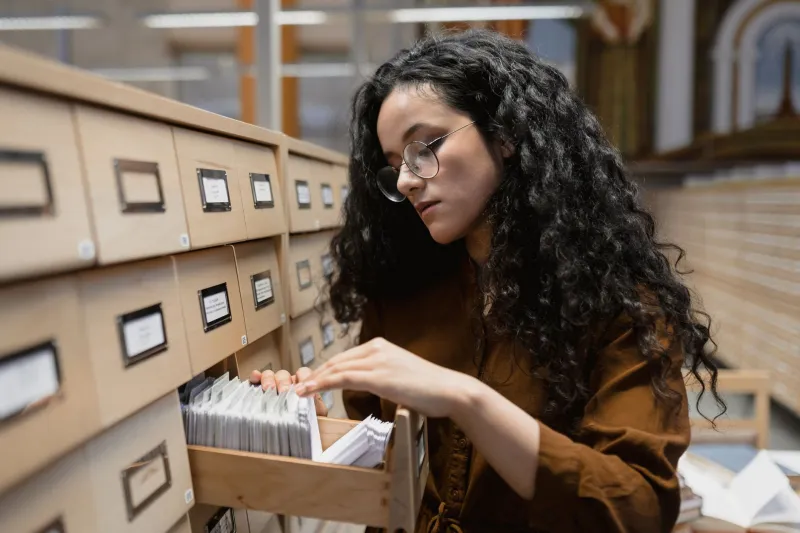
It smelled like wood polish and old paper. It stood against the wall of every public and school library in America — a massive, honey-colored cabinet with rows of small brass-handled drawers, each one labeled in a font that looked like it had been typed on a machine from another century. The card catalog. If you needed to find something, that's where you started.
And starting there was never simple. That was entirely the point.
A Filing System That Required Participation
The card catalog worked on a system developed by Melvil Dewey in the 1870s and refined over the following century into something genuinely elegant. Every book in the library had at least one card — usually three, filed by subject, author, and title — and each card contained a call number that corresponded to a physical location on the shelves.
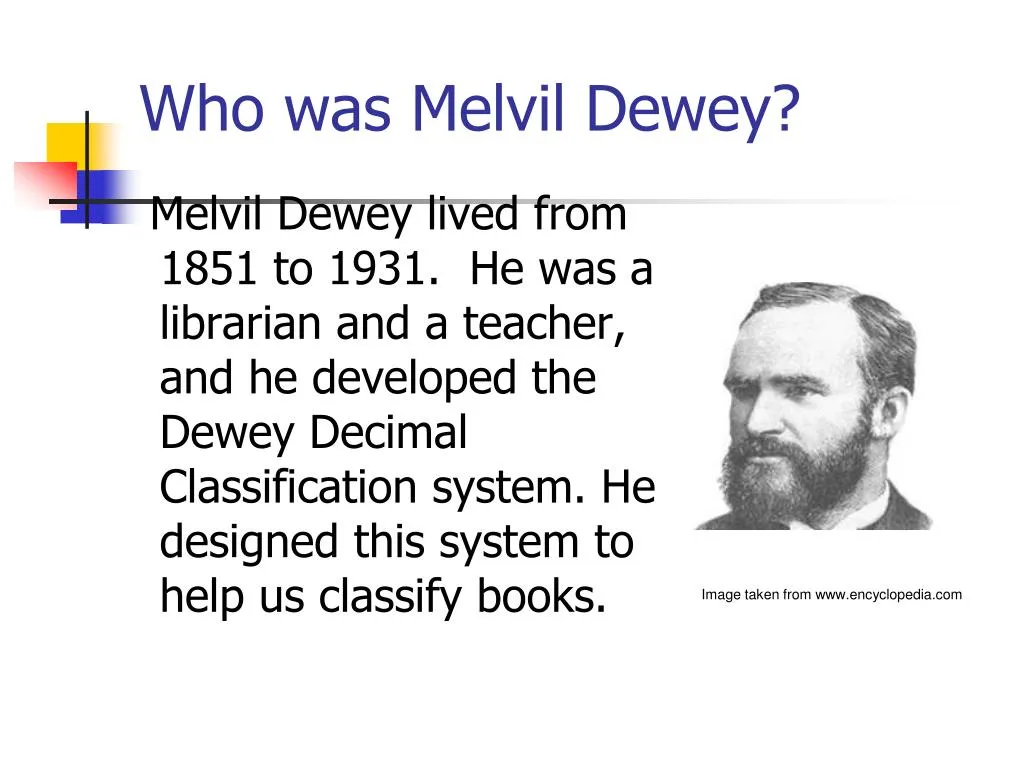 Photo: Melvil Dewey, via image2.slideserve.com
To find what you were looking for, you had to know enough to begin. You'd slide open a drawer, flip through the cards with your fingertips — actually feel the edges of each one — and read. The handwriting on older cards was sometimes cramped and faded. Newer cards were typed. Some had been annotated in pencil by librarians who'd been filing things since before your parents were born.
If you were researching the Civil War, you might start under C, discover that the subject branched into dozens of subcategories, follow a cross-reference to a related entry, and end up pulling three different drawers before you had a list of call numbers worth tracking down. Then you walked the stacks.
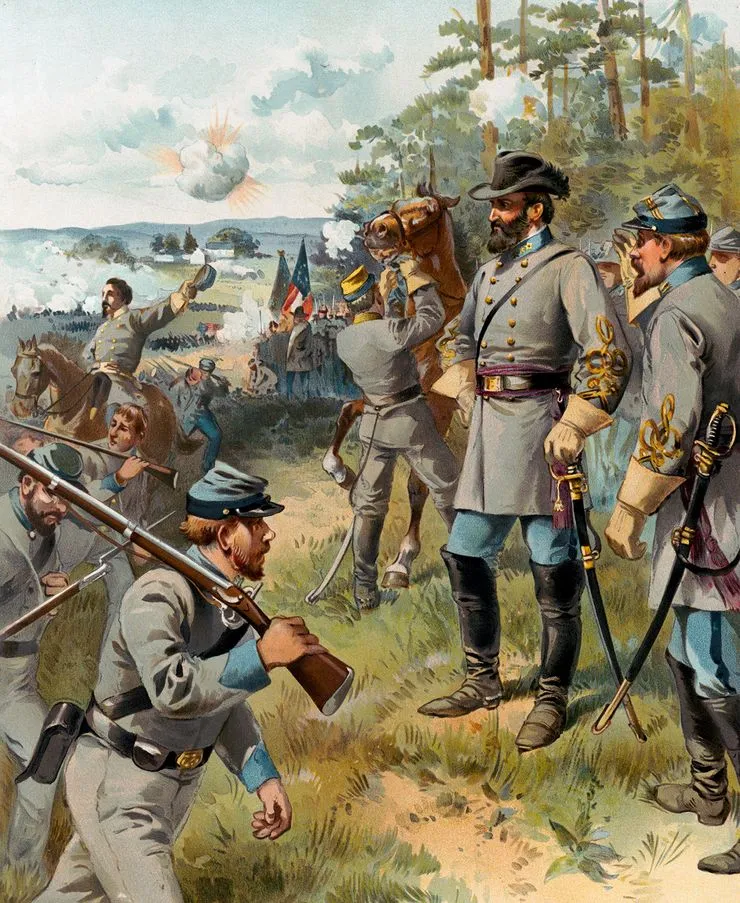 Photo: Civil War, via cdn.britannica.com
The walk mattered. Because on the way to the book you were looking for, you passed a hundred books you weren't.
Getting Lost Was the Feature, Not the Bug
Here's what the card catalog did that no search engine has ever quite managed: it made discovery a physical, spatial, accidental experience.
When you walked to the 940s section to find a book on World War II, you were walking through European history as a physical landscape. The shelves told you what was adjacent — what subjects lived next to each other, what ideas were considered related enough to share a neighborhood in the Dewey system. You'd reach for one book and your eye would land on another. You'd pull it. You'd stand in the aisle reading the first paragraph. You'd either put it back or tuck it under your arm.
That accidental discovery — the book you found because it was next to the book you were looking for — was one of the most reliable ways Americans encountered new ideas for most of the twentieth century. It required no algorithm, no recommendation engine, no data profile. It just required a person willing to walk slowly through a building full of organized knowledge.
Librarians understood this. The best ones would stand at the reference desk and ask you what you were actually trying to understand, not just what keyword you were searching. Then they'd send you somewhere you might not have thought to go on your own. That conversation — between a curious person and a professional who'd spent a career inside the architecture of knowledge — was irreplaceable.
What Instant Answers Actually Cost Us
The last major American libraries retired their card catalogs in the 1990s, replacing them with OPAC terminals — Online Public Access Catalogs — and eventually the integrated digital systems that libraries still use today. The wooden cabinets were sold off, repurposed as furniture, or simply discarded. Some collectors snapped them up. A few ended up in antique stores.
What replaced the card catalog was faster, broader, and dramatically more powerful in terms of raw retrieval. Type a keyword, get a result, note the call number, go directly to the shelf. The process that once took twenty minutes now takes twenty seconds.
But the hunt is gone. And the hunt taught things that the answer alone never could.
Searching a card catalog required you to think before you searched. You had to decide what category your question belonged to. You had to choose a word — the right word — to begin the process. If your first instinct was wrong, you adjusted and tried again. You learned, through trial and error, how knowledge was organized. You built a mental map of information itself.
Today's search bar accepts anything. Misspellings, half-formed questions, sentence fragments. The algorithm corrects your errors before you've had the chance to learn from them. The friction has been engineered away — and friction, it turns out, was doing something important.
The Patience That Card Catalogs Quietly Built
There's a generation of Americans who learned to research in the age of the card catalog who carry something that's genuinely hard to teach now: comfort with not knowing immediately.
When you grew up understanding that finding an answer required time, physical movement, and a willingness to follow a trail that might dead-end, you developed a different relationship with uncertainty. You expected the search to take a while. You expected to revise your approach. You expected that the answer might be imprecise, or that the book you needed might be checked out, or that you'd have to come back next week.
That patience — that tolerance for the slow accumulation of understanding — shaped how people read, how they argued, and how they held knowledge once they found it. You'd worked for the information. You weren't going to let it go easily.
What Lived Inside Those Drawers
The card catalog is gone from American libraries, and its absence is largely unmourned because the replacement is so obviously faster. But speed isn't the only variable worth measuring when it comes to how we learn.
What those wooden cabinets held, beyond the index cards themselves, was a model of how minds should move through information — carefully, laterally, with an openness to surprise. The search was the education. The trail was the lesson. The book you weren't looking for, sitting on the shelf next to the one you were, might have been the most important thing you found all year.
Before you blinked, looking something up was a journey. Now it's a reflex. And something real got left behind in that drawer.