Wood Paneling, Backward Seats, and Zero Airbags: The Station Wagon That Raised America
The Family Tank
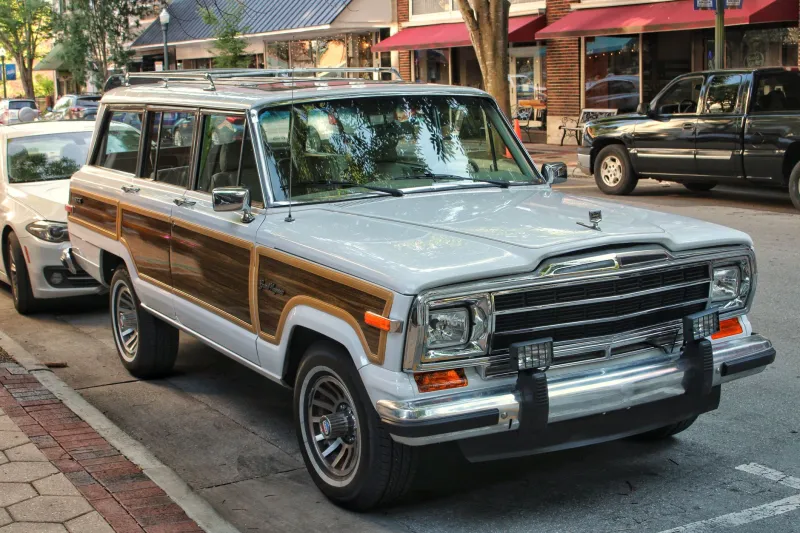
In 1975, the Hendricks family's Buick Estate Wagon was basically a living room on wheels. The thing was massive—nearly 19 feet long and wider than some modern SUVs—with genuine wood paneling that required annual refinishing and enough interior space to sleep four kids comfortably during cross-country road trips.
 Photo: Buick Estate Wagon, via cdn.wallpapersafari.com
Mrs. Hendricks could fit the entire soccer team in that wagon, plus their gear, plus coolers full of orange slices and Capri Sun pouches. The rear-facing third-row seat was every kid's favorite spot, offering an unobstructed view of the cars following behind and the perfect vantage point for making faces at other drivers.
This wasn't just transportation; it was the family command center, the mobile base camp for American suburban life. Before minivans existed and SUVs became status symbols, the station wagon was America's answer to the question: "How do we move our entire lives from place to place?"
The Safety Standards of a Different Era
Let's be clear about something: by today's standards, riding in a 1970s station wagon was basically a controlled crash waiting to happen. No airbags, no crumple zones, no anti-lock brakes. The seatbelts were optional accessories that most kids ignored completely. The rear-facing seat had no seatbelts at all—just a padded bench where children would bounce around like pinballs during sudden stops.
The tailgate was a horizontal platform that doubled as a picnic table, a diving board into swimming holes, and a makeshift bed during camping trips. Kids would ride back there with the gate down, legs dangling over the bumper, watching the road disappear behind them. Parents would pack the "way back" with camping gear, coolers, and sometimes a dog or two, creating a mobile storage unit that would make modern safety engineers faint.
But here's the thing: it felt safe because it felt substantial. These wagons weighed as much as modern pickup trucks, built with enough steel to stop a freight train. When you slammed the door, it made a sound like a bank vault closing. The hood was so long you could land a small aircraft on it. Everything about these vehicles communicated permanence and protection, even if the actual safety features were primitive by today's standards.
The Adventure Machine
Station wagons weren't just cars—they were expedition vehicles for middle-class American families. The cargo area could swallow vacation supplies for weeks: tents, sleeping bags, fishing gear, bicycles, coolers, and enough clothes to outfit a small army. The fold-down rear seat created a flat loading floor that turned the wagon into a pickup truck when needed.
Family road trips in the wagon era were genuine adventures, not the climate-controlled, entertainment-system-equipped journeys of today. No DVD players, no individual climate zones, no built-in WiFi. Just AM/FM radio, a few cassette tapes, and whatever games you could invent to pass the time. "I Spy" and the license plate game weren't quaint nostalgia—they were survival mechanisms for eight-hour drives with no electronic distractions.
The wagon's design encouraged family togetherness by making privacy impossible. Everyone shared the same air, the same music, the same bathroom stops. Arguments were settled quickly because there was nowhere to escape. Snacks were communal property. The journey really was half the fun because there was no alternative entertainment.
The Practical Magic
What made station wagons special wasn't just their size—it was their honest utility. These vehicles were designed by people who understood how American families actually lived. The cargo area had a flat floor, not the weird contours of modern SUVs. The tailgate opened horizontally, creating a natural work surface. The roof was flat enough to carry lumber, canoes, or Christmas trees without specialized equipment.
Parking lot tailgate parties weren't invented by college football fans—they were perfected by station wagon families who discovered that the rear of their vehicle made an excellent buffet table. The horizontal tailgate was the perfect height for serving food, changing diapers, or setting up a impromptu picnic anywhere you could find a parking space.
The interior was equally practical. Bench seats that could accommodate three adults across. No center console to divide the front seat—just one continuous bench where couples could sit close together and kids could climb over the seats freely. The dashboard was a simple collection of analog gauges and switches, nothing that required a computer science degree to operate.
The SUV Invasion
The station wagon's death was slow and then sudden. Minivans appeared in the 1980s, offering more interior space and sliding doors that made loading kids easier. But the real killer was the SUV revolution of the 1990s, which convinced American families that they needed four-wheel drive to navigate suburban parking lots and ground clearance to handle grocery store speed bumps.
SUVs promised the utility of a station wagon with the ruggedness of a truck, but what they actually delivered was complexity. Modern family haulers come with more computer processors than the Apollo moon landing, more sensors than a nuclear power plant, and more warning lights than a Christmas tree. They require premium fuel, synthetic oil changes every 10,000 miles, and software updates to fix problems that didn't exist when cars were mechanical devices.
 Photo: Apollo moon landing, via lh6.googleusercontent.com
The simple act of starting a modern SUV involves multiple computer systems talking to each other, verifying that you're authorized to operate the vehicle, and running diagnostic checks on dozens of electronic components. A 1975 station wagon required exactly one thing: a working ignition key.
The Subscription Economy Comes for Your Car
Today's family vehicles aren't just transportation—they're rolling subscription services. Want to use the remote start feature? That's $15 per month. Need navigation updates? Another monthly fee. The heated seats you thought you owned when you bought the car? Some manufacturers now charge a monthly subscription to activate them.
Modern SUVs offer incredible convenience: automatic climate control, entertainment systems for every passenger, and enough safety features to prevent accidents that good drivers would never have in the first place. But they've also introduced a level of complexity that makes simple repairs impossible and routine maintenance expensive.
When something broke on a station wagon, you could probably fix it yourself or find a local mechanic who understood carburetors and alternators. When something breaks on a modern SUV, you need a computer diagnostic system and a technician certified in that specific vehicle's electronic architecture.
The End of an Era
The last traditional American station wagon rolled off the production line in 1996, ending a 50-year run that defined how middle-class families moved through the world. What replaced it was more sophisticated, safer, and more efficient, but somehow less honest about its purpose.
Station wagons were cars that admitted what they were: family haulers designed to carry people and stuff from point A to point B as simply and reliably as possible. They didn't pretend to be luxury vehicles or outdoor adventure machines. They were automotive workhorses that happened to come with wood paneling and enough space for everyone to be comfortable.
We've gained a lot in the transition to modern family vehicles—better fuel economy, superior safety, and entertainment options that would have seemed like science fiction in 1975. But we've lost something too: the simple pleasure of a vehicle that did exactly what it promised, nothing more and nothing less, with enough room for the whole family and all their dreams.